

Why the King Brown Snake of Australia Earns Its Regal Name
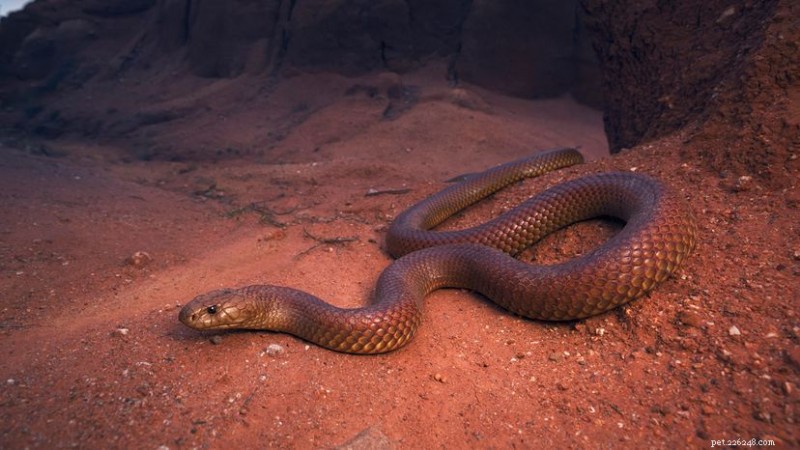
The king brown snake is a highly venomous predator renowned for its impressive size and adaptability. Thriving in the arid heartlands of Australia, this serpent has earned a reputation as one of the country’s most formidable reptiles.
While they can reach several meters in length, king browns remain largely shy around humans, only striking when they feel threatened or accidentally disturbed. So how did this powerful snake acquire its majestic title?
Let’s explore.
The King Brown’s Scientific Name and Common Nicknames
Scientific classification places the king brown in the genus Pseudechis, species australis (Pseudechis australis). It belongs to the Elapidae family, which includes well‑known venomous species such as cobras and mambas. Despite its name, the king brown is more closely related to black snakes (genus Pseudonaja) than to true brown snakes.
The common name “mulga snake” refers to its frequent presence in mulga woodlands, where the Acacia aneura provides both shelter and abundant prey. These ecosystems—characterised by low‑lying, drought‑resistant vegetation—offer an ideal habitat for the species.
How Big Are King Brown Snakes?
King browns are among the largest snakes in Australia, typically reaching 2.5 m (8 ft) in length, with some individuals recorded up to 3 m (10 ft). Size can vary with geography; snakes from drier regions tend to grow larger than those in temperate zones.
Juveniles hatch at only about 22 cm (9 in) and undergo rapid growth, reaching adulthood over several years as they consume insects, lizards, and small mammals.
Physical Features
These snakes possess heat‑sensing pits along the snout that detect infrared radiation from warm‑blooded prey, a crucial adaptation for nocturnal hunting. Their highly flexible jaws allow them to swallow prey larger than their heads, while their ectothermic metabolism requires them to bask in the sun and seek shade or burrows to regulate body temperature.
Remarkably, king browns show resistance to the venom of other snakes, enabling them to prey on venomous species without harm.
Geographic Range
King browns thrive in the dry deserts of central, northern and western Australia. Their range extends across the Northern Territory, arid regions of South Australia, central and western Queensland, as well as western and southern New South Wales and north‑western Victoria. They are absent from Tasmania and less common in cooler southern locales.
Venom Characteristics
King browns rank among Australia’s most venomous snakes. Their venom contains myotoxins, coagulants and neurotoxins, causing pain, swelling, blood‑clotting disturbances, muscle damage and, in severe cases, renal failure. Compared with the inland taipan and eastern brown snake, the king brown’s venom is potent but less lethal.
Most bites result from accidental contact or provocation; fatalities are rare when prompt medical treatment and antivenom are available.
Hunting Behaviors
These snakes use a sit‑and‑wait strategy, lying in ambush until prey approaches. They strike quickly, envenoming their target before swallowing it whole. Their venom serves both as a hunting aid and a defense mechanism.
Feeding and Diet
King browns are opportunistic feeders, preying on reptiles, reptile eggs, small mammals, birds, bird eggs and frogs. They are known to consume other snakes, including conspecifics, thanks to their venom resistance.
They hunt day and night, playing a vital role in controlling rodent populations and maintaining ecological balance.
Breeding and Mating Habits
Breeding timing varies by region: early spring in southwestern Australia, mid‑spring on the Eyre Peninsula, and a more flexible schedule in the north influenced by wet and post‑wet seasons. During courtship, males engage in combat, intertwining and pushing to establish dominance. Successful mates then produce clutches of 4–19 eggs after 39–42 days. Incubation lasts 70–100 days, with some eggs hatching two juveniles.
After hatching, juveniles are independent and mature within a few years.
Predators and Health Concerns
Young king browns fall prey to birds of prey (eagles, hawks), mammals (dingoes, feral cats, wild pigs), and larger reptiles (monitor lizards, giant snakes). Adult snakes face fewer threats but can still be targeted by apex predators.
Health Issues
In the wild, parasitic infections (worms, ticks, mites) and occasional respiratory or skin infections can occur. In captivity, poor nutrition, inadequate enclosure conditions and stress can lead to metabolic disorders and disease.
This article was written with AI assistance and subsequently fact‑checked and edited by a HowStuffWorks editor.
- Bland Diets for Dogs: A Complete Guide to Safe Feeding
- The Ultimate Shih Tzu Bath Guide: Pro Tips for Clean, Healthy Pups
- Mandatory Cat Microchipping: A Proven Way to Reunite Lost Cats with Their Owners
- The Ultimate Pug Guide: History, Traits, and Essential Care Tips
- Step‑by‑Step Guide: Teaching Your Puppy to Fetch
- Why Neutering Your Male Pet Makes the Perfect Father’s Day Gift
- Are Ball Pythons Truly Picky Feeders? Uncovering the Truth