

Indian Rock Python: Threats, Conservation, and Survival Insights
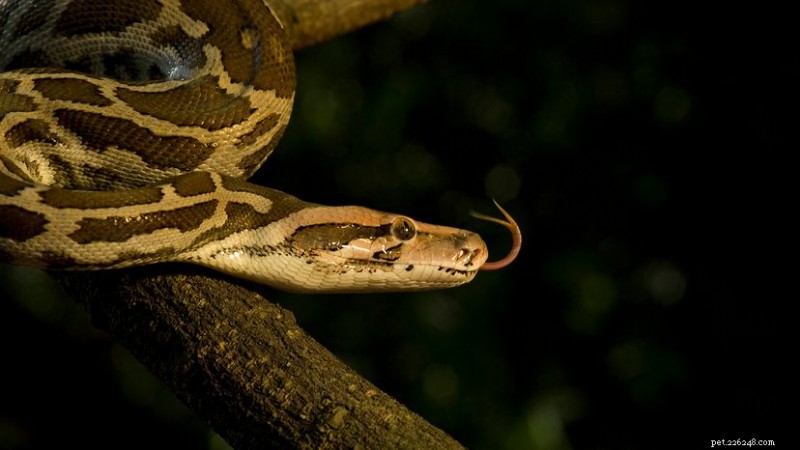
The Indian rock python (Python molurus), also known as the Asian rock python or black‑tailed python, is a formidable, non‑venomous constrictor that roams the forests, grasslands, and wetlands of the Indian subcontinent. Over recent decades, escalating habitat loss, illegal hunting, and the demand from the exotic‑pet and fashion markets have pushed this species toward a precarious conservation status.
Classification and Size
Belonging to the Pythonidae family, the Indian rock python is one of the world’s largest snakes. Mature individuals typically reach about 10 feet (3 meters) in length, though exceptional specimens have been recorded up to 6 meters (nearly 20 feet). The species is sexually dimorphic; females usually surpass males in size, a common trait among pythons. Their robust girth, combined with a strong musculature, equips them for powerful constriction.
Despite their massive size, these pythons are generally calm and are occasionally kept as exotic pets. However, their care demands are extreme, making them unsuitable for most owners.
Features
Coat patterns vary from light brown to tan or yellowish backgrounds marked by irregular dark blotches, providing effective camouflage in leaf litter and dense vegetation. The head is triangular and distinct from the neck, covered with smooth scales and equipped with sensory pits that help locate prey. Thick, supple skin protects the snake and aids in locomotion.
Like all pythons, they possess backward‑facing teeth that secure prey rather than tear it. This adaptation is integral to their hunting strategy.
Hunting
Indian rock pythons are ambush predators. They remain motionless until prey comes within striking distance, then use their teeth to seize the target before employing their hallmark constriction technique. By tightening each time the prey exhales, they gradually suffocate larger animals, a method that enables them to tackle prey many times their own size.
Diet and Nutrition
As apex predators, their diet consists largely of small to medium ungulates such as deer and antelopes, as well as domestic livestock like goats, chickens, and occasionally cattle. They also hunt smaller mammals, rodents, and birds. After a substantial meal, these snakes can endure weeks or even months without feeding, thanks to a slow metabolic rate.
In captivity, their diet is usually restricted to appropriately sized rodents and poultry. Balanced nutrition is essential to prevent obesity, a common issue when large snakes are overfed.
Mating and Parenting
Mating typically occurs during cooler months, allowing females to lay eggs in warmer periods for optimal incubation. Males locate receptive females through scent trails, engage in courtship, and may compete for mating rights. Copulation can last several hours, involving the insertion of one of the male’s hemipenes into the female’s cloaca.
Mother‑Child Behavior
After laying large clutches—often dozens of eggs—females exhibit rare maternal care. They coil around the eggs, using shivering thermogenesis to regulate temperature and protect the clutch from predators. Females remain with the eggs for 60–90 days, abstaining from feeding, until hatchlings, which emerge at about 18–24 inches (45–60 cm), are fully independent.
Population Threats
Habitat loss due to urban expansion, agriculture, and deforestation fragments populations and reduces prey availability. Illegal hunting for skin, meat, and traditional medicine remains a major driver of decline, despite legal protections. The exotic‑pet trade, while often captive‑bred, still fuels demand for wild captures, threatening genetic diversity.
Human‑python conflict rises as shrinking habitats bring the snakes into closer proximity with settlements, leading to retaliatory killings. Pesticide runoff and pollution further degrade prey populations and poison snakes indirectly.
Conservation Status
Internationally, the species is listed on CITES Appendix I, restricting all commercial trade of the snake and its derivatives. Nationally, Indian laws prohibit killing or capturing these pythons, and protected area networks aim to preserve critical habitats.
Telemetry Studies
In 2019, the Wildlife Institute of India fitted 10 pythons with radio transmitters. The data revealed highly elusive behavior, with snakes largely avoiding human contact—an attribute that could help mitigate conflicts and support pest control in agricultural landscapes.
Education and Outreach
Community awareness programs teach locals about the ecological role of pythons and strategies for coexistence. Rescue and rehabilitation centers provide care for confiscated or injured individuals, releasing them when viable. Captive breeding programs in zoos maintain genetic diversity and serve as educational platforms.
This article was written with AI assistance and rigorously fact‑checked by a HowStuffWorks editor.
- Cockatoos: Friendly, Intelligent, Sociable Pet Birds
- Say Goodbye to Boredom: Proven Ways to Keep Your Cat Happy and Stimulated
- The Curious Origin of the Shar-Pei's Signature Wrinkles
- Top Black & White Dog Names to Inspire Your Choice
- Effective Potty Training: 9 Proven Tips for Your New Dog
- Understanding Why Cats Bite Your Chin: Signs of Affection, Play, or Attention
- How to Help Your Dog Live a Normal Life with Epilepsy