

African Rock Python: Size, Diet, and Conservation Insights
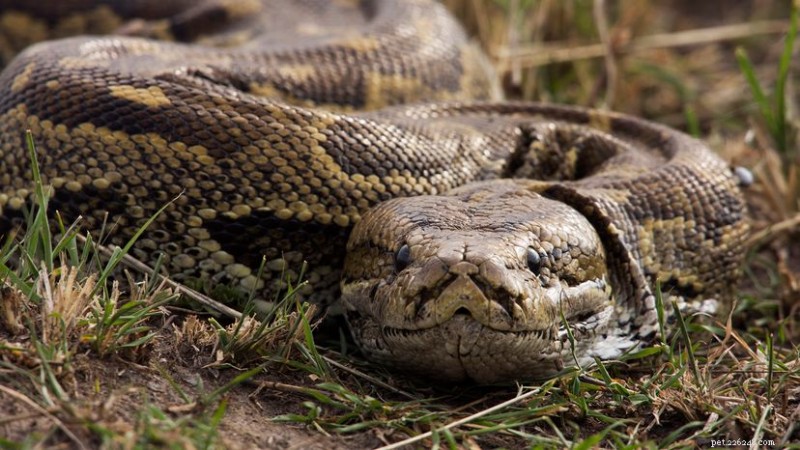
Large African rock pythons grow up to approximately 24 feet (7.5 m). Anup Shah / Getty Images
The African rock python (Python sebae) is renowned for its remarkable ability to consume large prey. Adults typically measure 10–16 ft (3–5 m) in length, but some specimens have reached 24 ft (7.5 m). Their powerful constriction and highly flexible jaws enable them to swallow animals ranging from rodents to hyenas, antelopes, and even crocodiles whole.
These pythons play a crucial ecological role as apex predators in sub‑Saharan Africa, shaping the populations of the species they hunt. Their diet varies with age: juveniles feed on small mammals and birds, while mature snakes target larger mammals, warthogs, fruit bats, monkeys, monitor lizards, and occasionally other reptiles.
Taxonomy
Python sebae belongs to the family Pythonidae. It is commonly referred to as the African python, Central African python, or rock python. Two subspecies are recognized: the Northern African rock python (Python sebae sebae) and the Southern African rock python (Python sebae natalensis). The former is generally larger and inhabits Central and Western Africa’s savannas, grasslands, and riparian zones, whereas the latter is slightly smaller, found in South Africa, Zimbabwe, and southern Mozambique, and often displays a more distinct color pattern.
How Big Is an African Rock Python?
Adults range from 10 to 16 ft (3–5 m), with exceptional individuals reaching 24 ft (7.5 m). Newborns measure 18–24 in (45–60 cm) and grow rapidly during their first few years, a critical adaptation that reduces predation risk.
Physical Features
These pythons are muscular, with smooth, glossy scales that provide protection and camouflage. Their coloration blends brown, olive, chestnut, and yellow tones, aiding concealment in diverse habitats. Distinctive dark splotches and stripes run along the dorsal side, more pronounced in the Southern subspecies. The head is triangular and slightly broader than the neck, with heat‑sensing pits near the lips that detect warm‑blooded prey even in low light. Their jaws are exceptionally flexible, allowing them to swallow prey several times their head width. Vertical pupils adapt to varying light conditions, enhancing hunting efficacy day and night.
Native Range
Python sebae is native to sub‑Saharan Africa, ranging from Senegal in the west to Ethiopia and Somalia in the east, and extending south to Namibia and South Africa. It occupies forests, savannas, grasslands, semi‑deserts, and rocky areas, often near permanent water. While adaptable to disturbed habitats—including agricultural fields—extreme arid deserts are unsuitable due to limited humidity and prey scarcity.
Florida Range
Since the early 2000s, a limited population of African rock pythons has been documented in Florida, specifically in Sarasota and Miami‑Dade counties. Their established range is confined to a small area in southeastern Miami, near US 41 (Tamiami Trail) and SR 997 (Krome Avenue). These snakes likely arrived through accidental escape or intentional release by irresponsible pet owners. While their impact appears localized compared to the widespread Burmese python in the Everglades, their presence underscores the importance of monitoring non‑native species that can disrupt local ecosystems.
Irresponsible Pet Owners
Releasing captive snakes into the wild—whether due to size, management challenges, or negligence—poses significant ecological risks. African rock pythons can thrive in Florida’s environment, potentially preying on native wildlife and outcompeting indigenous species.
Food Habits
African rock pythons are opportunistic feeders, with diet shifting from small mammals and birds in youth to large mammals and reptiles in adulthood. Their slow metabolism allows them to survive extended periods without food—several weeks to months for adults, occasionally up to a year for well‑fed individuals. Juveniles, however, require regular feeding to support growth.
Mating
Reproduction follows typical python behavior: oviparous with courtship and mating from November to March. Male competition involves ritualized combat—intertwining and attempting to pin each other—ensuring that the strongest mates. Copulation occurs through cloacal apposition, where the male transfers sperm to the female’s cloaca. Females lay 20–50 eggs, guard them actively, and incubate for 60–90 days. Post‑hatching, females may continue to protect the young for weeks.
Population Threats
Habitat loss from urban expansion, agriculture, and deforestation reduces available living space and prey density. Hunting for skin and fear‑based killings also diminish populations. The illegal pet trade further endangers younger snakes, removing them from the wild and subjecting them to stress and mortality. Conservation measures exist but enforcement is challenging; public education and awareness are essential to mitigate human‑induced threats.
This article was written in conjunction with AI technology, then fact‑checked and edited by a HowStuffWorks editor.
- Discover the Recovery Suit: A Stress‑Free Alternative to the Traditional Cone
- How Food Rewards Enhance Dog Training: Benefits & Best Practices
- Penn Plax Turtle Pier: The Ultimate Basking Solution for Turtles & Amphibians
- Professional Guide to Caring for Dogs in Heat
- Why Dogs Sit on Babies: Understanding Canine Behavior & Ensuring Family Harmony
- Top Dog Breeds Perfect for Air Travel
- Can Dogs Safely Enjoy Jello? Tips for Feeding Your Furry Friend