

Green Anaconda: The Mighty, Heaviest Snake on Earth
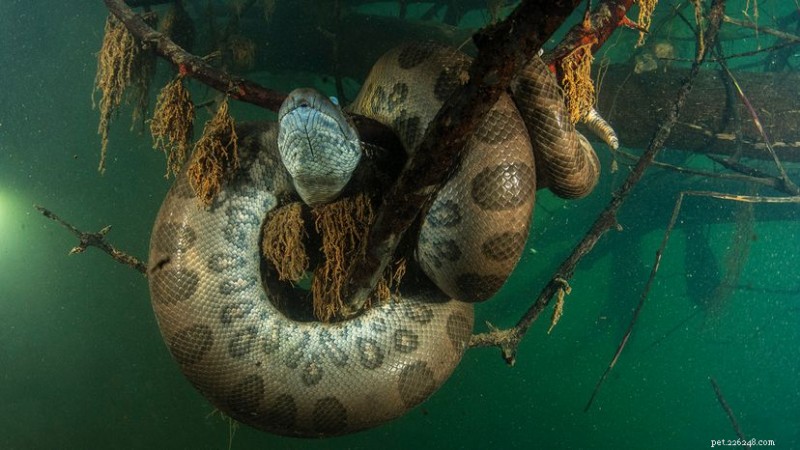
A green anaconda rests on a submerged branch in the Rio Formoso, Mato Grosso do Sul, Brazil. Photo: Julian Gunther / Getty Images
The green anaconda’s towering size, aquatic prowess, and silent strength have long fascinated herpetologists and adventure seekers alike.
While native to the remote waters of the Amazon basin, these massive snakes have surprisingly also established populations in the Florida Everglades, a testament to their adaptability.
In this article we examine the anaconda’s habitat, mating rituals, hunting techniques, and amphibious lifestyle.
Why the Name Means “Good Swimmer”
The genus name Eunectes derives from the Greek words eu ("good") and nectes ("swimmer"), aptly describing the species’ exceptional aquatic abilities.
The species epithet murinus comes from Latin murena, the moray eel, highlighting the snake’s serpentine form and water‑bound life.
Physical Features
These snakes boast a thick, muscular body built for constriction. Their dark green skin, mottled with black spots and stripes, provides camouflage in murky waters.
Their small head, positioned high on the body, keeps eyes and nostrils above the surface, allowing the snake to breathe and see while the rest of its body remains submerged. Smooth scales reduce drag, aiding swift swimming.
Jaw Flexibility
Unlike mammals, anacondas have highly elastic ligaments at the mandibular symphysis and quadrate bones, permitting their jaws to spread wide. This adaptation enables them to swallow prey larger than their own head, including wild pigs, jaguars, and deer.
Size
Green anacondas can exceed 20 ft (6 m) and have been recorded over 30 ft (9 m) long. Their mass is equally impressive, with individuals weighing more than 500 lb (227 kg), outpacing other large snakes in bulk.
On Land and in Water
Native to South America’s tropical rainforests, swamps, marshes, and slow‑moving rivers, the species’ range includes Brazil, Venezuela, Colombia, Ecuador, Peru, and parts of Bolivia.
While they prefer aquatic environments, anacondas will venture onto land to bask or seek shelter in burrows and vegetation, although they are less agile outside the water.
This amphibious lifestyle makes them apex predators, capable of hunting both aquatic and terrestrial prey.
Hunting Strategy
Green anacondas rely on stealth and raw strength rather than venom. They are opportunistic ambush predators, remaining concealed underwater or in vegetation until prey approaches.
When a target is within striking distance, the snake launches a rapid strike, gripping the victim with sharp teeth before coiling its muscular body to constrict. Constriction prevents breathing, disrupts blood flow, and can cause bone fractures.
Once immobilized, the anaconda begins swallowing the prey whole, aided by its highly flexible jaws.
Diet
As an apex predator, the green anaconda preys on a diverse array of animals: capybaras, caimans, deer, peccaries, other snakes, birds, fish, and aquatic mammals. Their elastic skin and powerful muscles allow them to consume prey larger than their own body.
Large meals trigger a slow digestion phase, during which the snake’s metabolic rate increases to efficiently process the nutrients.
Mating and Reproduction
Reproduction aligns with the rainy season (November–April). Males engage in intense combat to secure mating rights, often forming “breeding balls” where several males coil around a single female.
Females give birth to live young after a 6‑7 month gestation. Clutch size varies, and mothers exhibit brief maternal care before moving on.
Lifespan
In the wild, green anacondas typically live 10–15 years, though some may reach older ages under favorable conditions.
Captive individuals, protected from predators and with regular nutrition, can exceed 20 years, with the longest recorded lifespan surpassing 30 years.
Wild populations face threats from habitat loss, hunting, and competition, reducing overall life expectancy.
This article was created with AI assistance, then fact‑checked and edited by a HowStuffWorks editor.
- Jackson Galaxy’s 4 Proven Keys to Successful Cat Scratching
- Smart Activity Trackers for Dogs: Monitor Health & Activity
- Tibetan Mastiff in India: Origin, Size, Price, and Care Guide
- Seasonal Allergies in Dogs: Recognizing Symptoms & Effective Treatment
- Professional Dog Massage Guide: Techniques & Benefits
- Effective First Aid for Your Cat After an Insect Sting
- When to Use Zeolite in Your Aquarium – Expert Guide