

The Boa Constrictor: Habitat, Diet, and Reproduction Explained
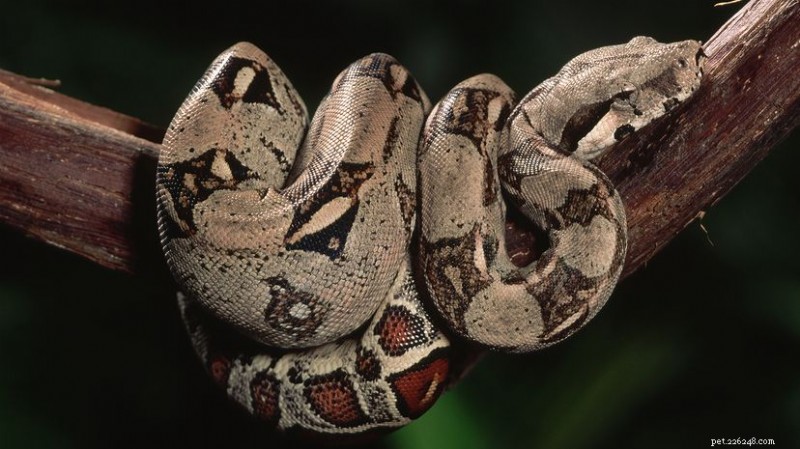
The boa constrictor (Boa constrictor) is the most iconic member of the Boidae family, renowned for its impressive size, powerful constriction technique, and tranquil temperament when properly handled.
While the Boidae family contains many genera, the genus Boa comprises a single species—Boa constrictor—making it a rare example in taxonomy where common and scientific names match. The species is distributed across the New World, from northern Mexico through Central America and into the Amazon basin and beyond.
In the wild, adults typically live 20 to 30 years, with exceptional specimens reaching 40 years under optimal care. In captivity, careful diet, temperature, and humidity control can extend their lifespan further.
Key Characteristics
Adults measure 6–10 ft (1.9–3.1 m) long, though some individuals exceed this range. Their bodies are muscular and heavy‑bodied, with a broad, triangular head distinct from the neck and small, hooked teeth designed for gripping prey. Skin patterns vary widely across subspecies, providing effective camouflage in their native habitats.
The red‑tailed boa (Boa constrictor constrictor) is famed for its vivid reddish‑brown tail, a hallmark of its subspecies. All boas possess heat‑sensing pits near the mouth and vertical pupils, adaptations that enhance night vision and allow detection of warm‑blooded prey in darkness.
Despite their formidable hunting ability, boas are generally calm and can be handled safely when raised from a young age.
Recognized Subspecies
- Boa constrictor constrictor – The red‑tailed boa, found in Brazil, Peru, and Suriname.
- Boa constrictor imperator – Common in Central America and northern South America; popular in the pet trade.
- Boa constrictor amarali – Occurs in Brazil and Bolivia; slender body and distinct coloration.
- Boa constrictor occidentalis – The Argentine boa, native to Argentina and Paraguay, notable for its larger size and darker hues.
- Boa constrictor orophias – Endemic to St. Lucia; typically darker.
- Boa constrictor melanogaster – Found in Ecuador and Peru; named for its dark belly.
- Boa constrictor nebulosa – Native to Dominica; characterized by a cloud‑like pattern.
Geographic Range and Habitat
Boa constrictors occupy a vast range across the Americas, from Mexico through Central America and into the Amazonian and Atlantic forests of South America. They thrive in diverse ecosystems, including tropical rainforests, savannas, and arid foothills.
In rainforest habitats, they frequent the canopy and areas near water sources, leveraging their swimming ability. In drier environments, they seek shelter in burrows, caves, or under rocks to regulate temperature and hydration.
Hunting Strategy
Primarily nocturnal, boas hunt during cooler evening hours to avoid heat stress and to take advantage of prey activity. They employ a sit‑and‑wait tactic, using camouflage to ambush unsuspecting mammals, birds, and occasionally reptiles.
Once a prey item is seized, the boa coils around it and constricts until the victim’s breathing ceases. Its flexible jaws then allow consumption of prey whole.
Diet
Wild Diet
Adults feed on a range of mammals and birds, and occasionally reptiles. Smaller boas target rodents, lizards, and frogs, while larger individuals may subdue rabbits, small deer, or other medium‑sized mammals.
Juvenile Feeding
Young boas consume small rodents, nestlings, and sometimes lizards or amphibians, adjusting prey size as they grow.
Captive Care
In captivity, a regular schedule of pre‑killed rodents (mice or rats) is recommended. Feeding frequency decreases with age, and overfeeding should be avoided to prevent obesity.
Mating and Reproduction
Breeding occurs during the dry season, ensuring births align with the wet season when food is plentiful. Females emit pheromones to attract males, who may travel considerable distances to find a mate.
Boas are ovoviviparous: the female carries fertilized eggs internally and gives birth to live young, typically ranging from a few to over 60 offspring. Females usually abstain from feeding during gestation.
After birth, hatchlings are independent; parental care is absent, underscoring the importance of self‑sufficiency in the wild.
Conservation Status
The IUCN Red List lists Boa constrictor as Least Concern, indicating that, globally, the species is not at immediate risk of extinction. However, regional pressures—habitat loss, hunting, and the exotic pet trade—can threaten local populations.
Effective conservation hinges on habitat preservation, regulated trade, and ongoing monitoring to safeguard regional populations.
This article was drafted with AI assistance, then verified and edited by a HowStuffWorks editor.
- Top Amazon Dog Pools: Portable, Durable, & Easy to Set Up
- Pointer Dog Breed Overview
- 10 Fascinating Facts About Cats You Didn't Know
- 12 Low-Maintenance Short‑Haired Cat Breeds – With Photos
- Protecting Your Fish’s Slime Coat: A Practical Guide
- Understanding Cloudy Eyes in Dogs: Causes, Symptoms, and Treatments
- How to Host a Safe and Enjoyable Picnic with Your Dog