

Snakes Are Not Deaf: New Research Confirms They Hear Airborne Sounds
For decades, herpetologists have known that snakes can detect ground‑borne vibrations, but the question of whether they perceive airborne sound has remained unsettled. A recent study published in PLOS ONE provides definitive evidence that snakes do, in fact, hear airborne vibrations, and that their reactions vary across species.
How Snakes Detect and Respond to Airborne and Ground‑Borne Sound
While vision and olfaction are primary sensory modalities for most snakes, hearing plays a crucial role in predator avoidance and environmental awareness. Evolutionarily, this sense is vital for species exposed to predators such as monitor lizards, cats, and even other snakes.
The research team collaborated with the Queensland University of Technology’s School of Creative Practice to create a sound‑proof chamber where individual snakes could move freely during testing. Seventeen stimuli were presented, each spanning distinct frequency ranges: 1–150 Hz, 150–300 Hz, and 300–450 Hz. For context, the human voice typically occupies 100–250 Hz, while avian chirps can reach 8,000 Hz.
Using an accelerometer, the team confirmed that the snakes were responding to airborne sounds rather than merely detecting ground vibrations.
Do Snakes Move Toward or Away From Sound?
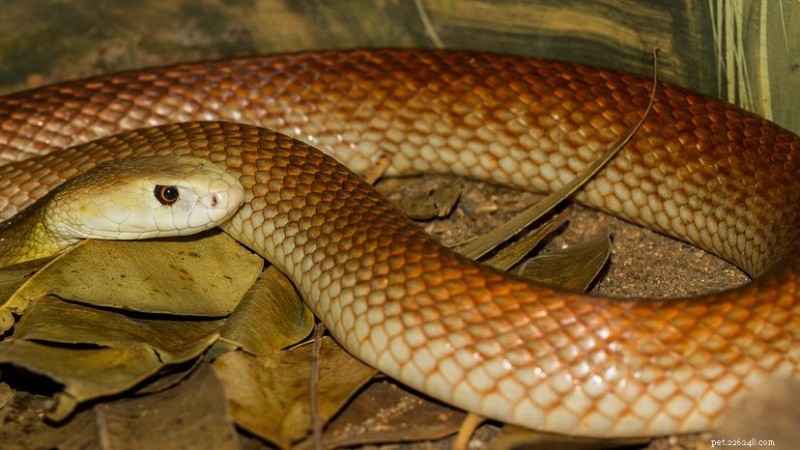
Behavioral responses differed markedly between species. The non‑venomous Woma python (Aspidites ramsayi) increased its locomotion and approached sound sources, exhibiting a curious “periscoping” posture. In contrast, ambush predators such as death adders (Acanthophis), taipans (Oxyuranus), and brown snakes (Pseudonaja) tended to retreat from sound, likely as a defensive strategy against large vertebrate traffic.
Taipans, known for their aggressive foraging during daylight, displayed heightened caution, suggesting acute sensitivity to potential aerial predators.
Can Snakes Hear Us?
The study demonstrates that snakes can detect frequencies below roughly 600 Hz, a range that overlaps with human vocal tones. In the trials, sounds at 85 dB—equivalent to a loud conversation—elicited significant behavioral changes in several species. While this does not preclude the possibility of snakes hearing quieter, conversational tones, the experiment confirms their ability to perceive loud human voices.
Post‑doctoral researcher Christina N. Zdenek led the investigation. She is affiliated with the Venom Evolution Lab at the University of Queensland, funded by the Australian Research Council, and contributes to the Australian Reptile Academy.
This article is a republished version from The Conversation, released under a Creative Commons license. Original article.
- Safe and Effective Dog Training with Aversives
- Common Allergens That Trigger Dog Allergies – Signs, Diagnosis & Relief
- Simply Pets Online Slow Feed Bowl – Reduce Bloat & Keep Dogs Engaged
- German vs. American Rottweiler: Key Differences Explained
- Praying Mantis as a Pet: Is It Right for You?
- Borador Dog: A Reliable Guard and Companion
- 7 Proven Ways to Keep Your Dog’s Teeth Clean and Healthy