

The Python Snake: Size, Diet, Habitats, and Conservation
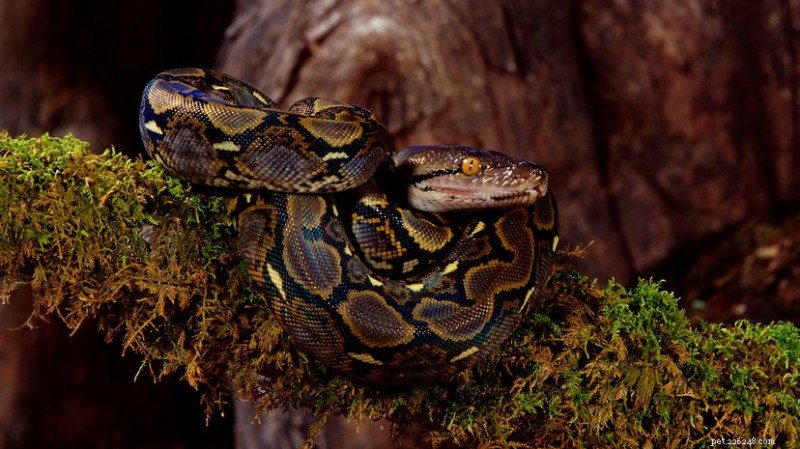
The reticulated python holds the record for the world’s longest snake, with some individuals exceeding 25 ft (7.6 m). John Conrad / Getty Images
Pythons belong to the family Pythonidae and are non‑venomous constrictors that thrive in tropical and subtropical regions worldwide. The name derives from the Greek pythōn, referring to a mythical serpent.
These reptiles can grow to impressive lengths—up to 30 ft (9.1 m) in some species—yet most pose no danger to humans unless provoked. Avoid handling juveniles, as they can be aggressive.
Types of Pythons
The Pythonidae family is divided into the genus Python, which contains several well‑known species, each adapted to distinct habitats.
- Reticulated python (Malayopython reticulatus): Native to Southeast Asia, it is the longest snake in the world, often exceeding 20 ft (6.1 m). Its complex geometric pattern allows it to blend into forest floors and grasslands.
- Burmese python (Python bivittatus): A heavy‑bodied species found in Southeast Asian grasslands, marshes, swamps, and the Everglades, where it is an invasive species. It can reach 23 ft (7 m).
- Ball python (Python regius): A smaller African species, 3–5 ft (0.9–1.5 m), prized as a pet for its docile nature and diverse color morphs. It inhabits sub‑Saharan grasslands and shrublands.
- Carpet python (Morelia spilota): Distributed across Australia, New Guinea, and nearby islands, it exhibits a wide range of patterns and is semi‑arboreal, living in rainforests, woodlands, and even urban areas.
- African rock python (Python sebae): One of Africa’s largest snakes, up to 25 ft (7.6 m). It occupies savannas and forests near water bodies.
- Green tree python (Morelia viridis): Known for its bright green coloration, it inhabits New Guinea rainforests and parts of Australia. It remains relatively small, 5 ft (1.5 m) maximum.
- Indian python (Python molurus): Found in South Asia, it prefers grasslands and marshes. While typical individuals reach 20 ft (6.1 m), larger specimens are rare.
- Blood python (Python brongersmai): Native to the Malay Peninsula and parts of Indonesia, it has a stocky build and reddish‑brown coloration. Adults are 4–6 ft (1.2–1.8 m).
Characteristics
Python species are distinguished by their muscular bodies, heat‑sensing pits, and powerful constricting ability.
Muscular Bodies
Their robust musculature allows them to coil tightly and suffocate prey. Camouflaging patterns aid in ambush hunting.
Flexible Jaws and Heat‑Sensing Pits
Back‑facing teeth let pythons swallow prey larger than their heads, while heat‑sensing pits detect warm‑blooded animals in low light.
Dual Lung Capacity
Unlike many advanced snakes, pythons retain two functional lungs—a remnant of their lizard‑like ancestors. The right lung is typically larger, providing extra respiratory capacity for their extensive bodies.
Lifespan
In the wild, pythons can live over 20 years; in captivity, they often surpass two decades. Their longevity and calm disposition contribute to their popularity among herpetologists and pet owners alike.
The Python Diet
Pythons are opportunistic predators, feeding primarily on mammals and birds. Smaller species target rodents and birds; larger species can take down monkeys, pigs, and occasionally deer.
They employ a stealthy ambush strategy—camouflaged, patient, and striking with precision. Once the prey is secured, constriction tightens with each exhalation until suffocation occurs.
Their flexible jaws and skin enable them to consume prey larger than their heads. Combined with a slow metabolism, a single large meal can sustain a python for weeks or months.
Habitats
Pythons inhabit diverse environments across Africa, Asia, and Australia: from lush rainforests and arid deserts to swamps, grasslands, and even near human settlements. Their adaptability underscores their evolutionary success.
In Florida, escaped Burmese pythons have established breeding populations, raising ecological concerns due to their impact on native wildlife (IUCN, 2023).
Do Pythons Lay Eggs?
Most python species are oviparous. Female pythons can lay from a dozen to over 100 eggs in a single clutch, depending on species and size.
During the 60–90 day incubation period, the female exhibits remarkable maternal care by coiling around the clutch and using muscular contractions to regulate temperature—an uncommon behavior among reptiles.
Upon hatching, young pythons use a temporary “egg tooth” to break the shell. Hatchlings are independent and receive no further maternal care.
Are Pythons Nonvenomous Snakes?
While pythons lack venom, they are deadly predators. Constriction, not venom, subdues their prey by cutting off blood flow, leading to eventual death before consumption.
Their slow metabolism also allows them to survive months between meals.
Reticulated Python: The World’s Longest Snake
Reticulated pythons can exceed 20 ft (6.1 m) and have been recorded at about 32 ft (9.8 m). Native to Southeast Asia—including Indonesia, the Philippines, and parts of South Asia—they are nocturnal, solitary, and excellent swimmers.
Currently listed as “Least Concern” by the IUCN, they face threats from habitat loss and hunting for their skin.
Pythons vs. Boa Constrictors
Although both are large constrictors, pythons and boas differ in distribution, reproduction, and physiology.
Boas, native to Central and South America, are ovoviviparous and give birth to live young, whereas pythons lay eggs that females often incubate.
Pythons generally grow larger, possess heat‑sensing pits, and are more docile—traits that favor their presence in the exotic pet trade.
This article was written with AI assistance, then fact‑checked and edited by a HowStuffWorks editor.
- Can Parrots Hybridize? A Comprehensive Guide to Crossbreeding Pet Parrots
- Embracing Positive Training: Why It’s Essential for Your Dog
- Do Drug‑Detection Dogs Detect Dab Pens?
- Bourke’s Parakeet: A Unique, Charming Companion
- Do Cats Enjoy Hugs? Understanding Your Feline's Comfort
- Why Deer Antlers Are the Ideal Chew Toy for Dogs
- Recognizing Dog Spinal Cord Injury: Key Signs & Symptoms for Prompt Care