

What Is a Group of Guinea Pigs Called? – Herds, Groups, and Their Social Dynamics
Ever noticed your guinea pigs curling together and wondered what the collective name for this cozy group is? These social rodents have captivated pet owners for centuries, and the terminology used to describe their groups blends scientific precision with playful creativity.
The most widely accepted term is herd, a nod to the tight‑knit family units that exist in the wild. In natural settings, a typical herd consists of one dominant male (the boar), several females (the sows), and their offspring. This structure maximizes protection and efficient foraging.
Pet owners often invent affectionate nicknames—"The Popcorn Posse", "Velvet Squadrons", or "Wheek Squad"—that reflect each group’s unique personality while honoring the species’ scientific name, Cavia porcellus. These playful labels foster a sense of community among cavy enthusiasts worldwide.
Understanding the proper terminology not only satisfies curiosity but also deepens your bond with these social companions. Whether you refer to them as a herd or create your own affectionate title, recognizing their need for companionship enhances their well‑being.
Understanding Guinea Pigs: An Introduction

The journey of guinea pigs from the Andes to your living room is a story of evolution, domestication, and enduring companionship. Originally mountain dwellers of South America, these rodents evolved from wild ancestors into beloved household pets over thousands of years.
Origin and Popularity
Long before becoming household favorites, guinea pigs thrived in the rugged Andes. Indigenous peoples domesticated them over 7,000 years ago as both a food source and a symbolic creature in ritual practices. In the 1500s, European traders shipped them across the Atlantic, where they quickly became curiosities and symbols of exotic status.
Royal patronage followed: Queen Elizabeth I famously kept a guinea pig in her portrait, sparking a trend among aristocrats. Their gentle temperament and soft vocalizations made them irresistible companions. By the 19th century, guinea pigs were widespread household pets across Europe and North America.
Overview of Their Role as Pets
Modern guinea pigs excel as social, low‑maintenance companions. Their playful chirps and affectionate head‑butts create instant bonds, and unlike many small pets, they rarely bite. They thrive best in pairs or groups, making them ideal for teaching children responsibility. With proper care—adequate space, fresh vegetables, and daily interaction—they can live 5–8 years, and some individuals have reached nearly 15 years with optimal care.
A Brief History of Guinea Pigs and Their Domestication
Beyond their role as pets, guinea pigs have profoundly influenced human cultures, from ancient rituals to royal courts. Their story intertwines with history in surprising ways.
Early Domestication in the Andes
Andean tribes raised guinea pigs over 7,000 years ago for food and spiritual purposes. The Moche civilization depicted them in pottery, while the Inca used them in sacred ceremonies. A Quechua elder notes that "they were messengers between worlds," highlighting their cultural significance.
| Era | Region | Role |
|---|---|---|
| 5000 BC | Andes Mountains | Food & Rituals |
| 1200‑1532 AD | Inca Empire | Sacred Offerings |
Guinea Pigs in European Culture
Spanish explorers introduced these "exotic pigs" to Europe in the 1500s. Nobles adored them—Queen Elizabeth I’s portrait featuring a guinea pig sparked a pet trend. By 1580, they appeared in European art as luxury items.
Today, the transition from mountain dwellers to royal favorites underscores the deep bond between animals and human society.
Nomenclature and Cultural Connections of Guinea Pigs
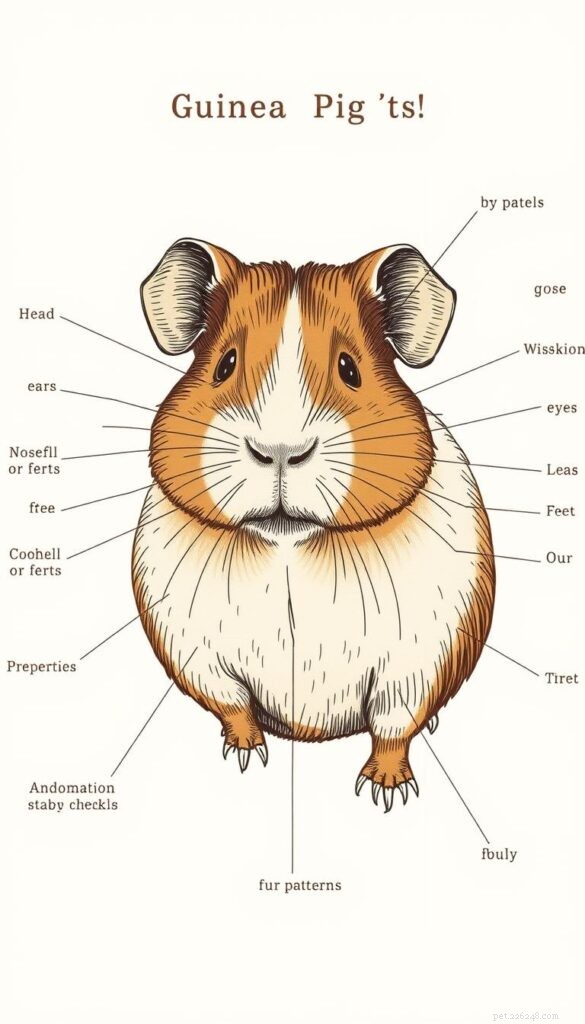
The linguistic journey of guinea pig names offers a global linguistic adventure. From Latin to local dialects, each name reflects history, geography, and cultural nuances.
Latin, Local, and International Names
Their scientific name, Cavia porcellus, translates to "little pig"—a nod to their rounded bodies and squeaking sounds. Early naturalists believed they resembled miniature swine, hence the name.
The origin of "guinea" is debated. Possible explanations include:
- Reference to the Guinea region of West Africa
- Connection to South America’s Guiana region
- A corruption of "coney," an old English term for rabbit
| Language | Name | Literal Meaning |
|---|---|---|
| German | Meerschweinchen | Little sea pig |
| Spanish | Conejillo de Indias | Little rabbit of the Indies |
| Japanese | モルモット | Marmot |
Names such as Polish świnka morska and Russian морская свинка echo the sea‑voyage theory, while China’s 豚鼠—"pig mouse"—captures their hybrid charm. Each title reflects how societies welcomed these South American natives into their homes and lexicons.
Physical Characteristics and Unique Features
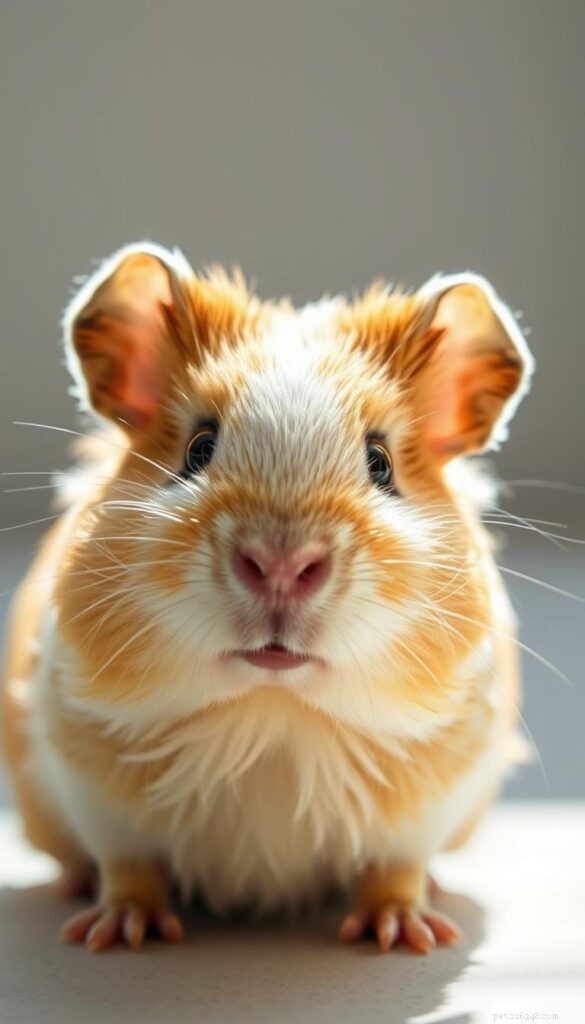
Guinea pigs possess a robust body built for social interaction. They typically weigh between 1.5 and 2.6 lb (0.68–1.18 kg) and measure 8–10 inches (20–25 cm) in length, comparable to a small pineapple. These dimensions require spacious enclosures—far larger than the cramped cages common for hamsters.
| Category | Pet Breeds | Livestock Breeds |
|---|---|---|
| Weight Range | 1.5–2.6 lb | Up to 6.6 lb |
| Body Length | 8–10 inches | 12–16 inches |
| Average Lifespan | 4–8 years | 3–5 years |
Four ever‑growing incisors require constant chewing. Providing applewood sticks or timothy hay prevents dental issues. Their sturdy build makes them safer for gentle handling by children compared to delicate mice.
With meticulous care—regular veterinary checkups and a vitamin C‑rich diet—guinea pigs can exceed typical lifespans. The record holder lived nearly 15 years, demonstrating the potential for longevity in well‑managed environments.
Social Behavior and Group Dynamics
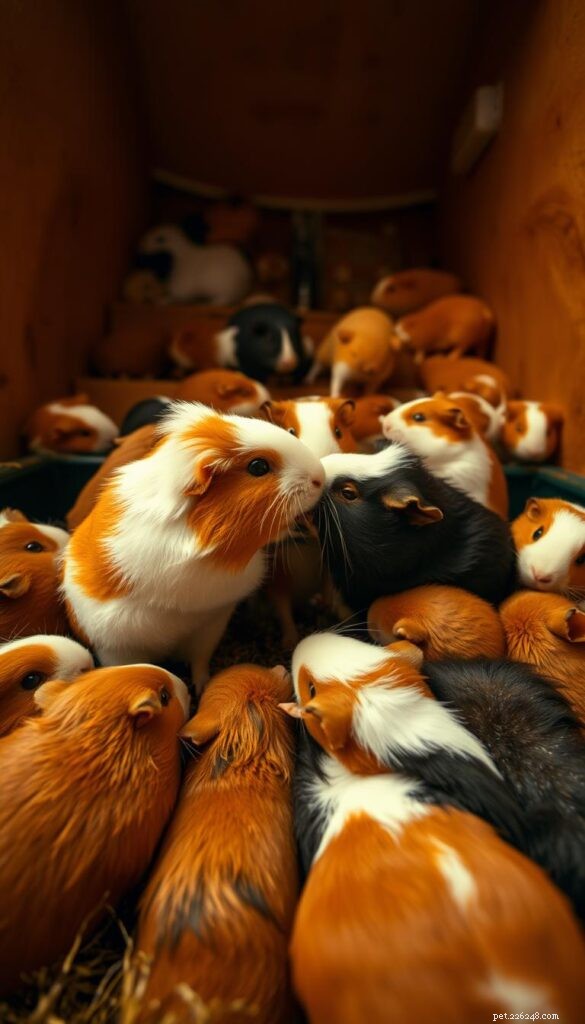
Guinea pigs live in a complex social world. Their group dynamics blend wild instincts with domestic adaptations, ensuring safety and cooperation.
Group Structure and Hierarchy
In the wild, a typical herd features one dominant boar, 2–5 sows, and their pups. This arrangement minimizes conflict while maximizing protection. Domestic groups mirror this structure, even without predators.
| Behavior | Wild Herds | Pet Groups |
|---|---|---|
| Dominance Displays | Ear biting, chasing | Head nudging, rumbling |
| Social Grooming | Mutual cleaning | Gentle nibbling |
| Conflict Resolution | Quick chases | Popcorning away |
Boars may chew each other’s fur to assert rank, showing raised fur (piloerection) and low growls during disputes. Mounting behaviors—common even in same‑sex pairs—establish order without aggression.
Social grooming reinforces bonds; sows lick companions’ heads, while pups learn hierarchy through play‑fights. Solitary guinea pigs often overeat or hide, indicating a need for companionship. Understanding these cues helps create harmonious groups. Pairing younger boars can ease introductions, and providing multiple hideouts reduces tension.
Insights into Guinea Pig Communication and Vocalizations
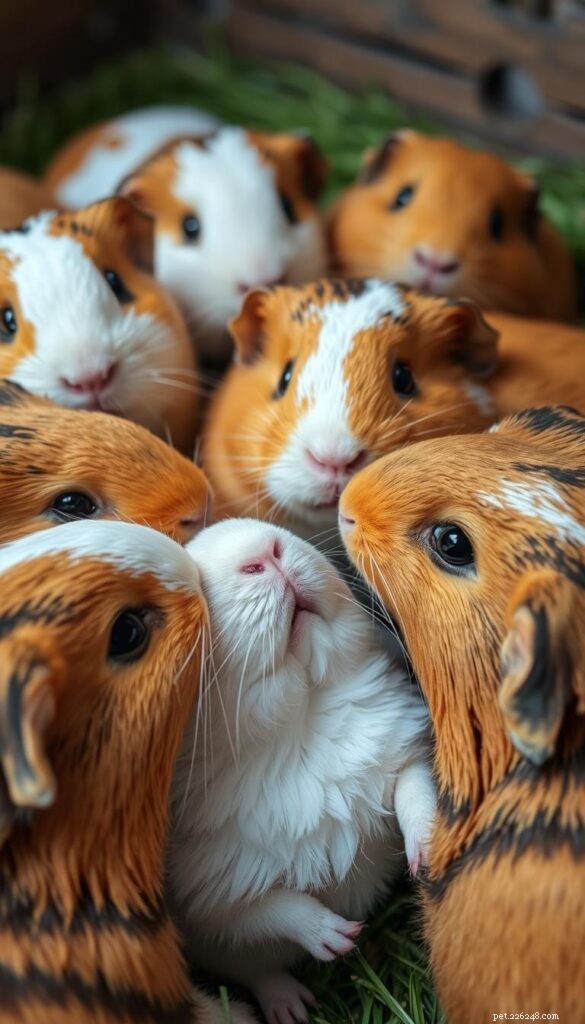
Guinea pigs communicate through a rich tapestry of sounds and body language. Decoding their vocal repertoire enhances your ability to respond to their needs.
Common Sounds and Their Meanings
High‑pitched "wheeks" greet you at mealtime, while soft purrs signal contentment during petting sessions. Male guinea pigs emit deep rumbles during courtship, vibrating their bodies like tiny maracas. These sounds function as social signals, reinforcing bonds.
| Sound | Meaning | Common Context |
|---|---|---|
| Wheek | Excitement/Request | Feeding time |
| Purr | Happiness | Petting sessions |
| Rumble | Dominance/Romance | Social interactions |
| Chatter | Warning | Territorial disputes |
| Shriek | Distress | Sudden pain/fear |
| Chirp | Stress/Hunger | Baby communication |
Non‑Verbal Communication Cues
Watch for "popcorning"—joyful jumps indicating delight. A frozen posture with wide eyes signals "danger ahead!" Nose nudges request attention, while gentle teeth chattering tells a friend to back off. Their 340° vision helps them spot approaching hands or treats. Sniffing sessions during introductions serve as a furry handshake, confirming identities.
Mastering these signals turns you into a fluent translator in your guinea pig’s whiskered world.
What Is a Group of Guinea Pigs Called?
Curious how cavy lovers describe their furry collectives? The answer blends biology with creative flair. While the scientific term is herd, owners often coin affectionate nicknames that capture their group’s personality.
Popular Collective Terms Explained
The scientific designation, herd, reflects natural groupings of one boar, 3–5 sows, and pups working together for safety and foraging efficiency. In domestic settings, the herd may behave differently: startled groups may "stampede" in zigzag patterns—a vestige of ancestral escape responses.
Pet owners often create playful names—"Popcorn Posse", "Wheek Squad", or "Velvet Squadrons"—that highlight their guinea pigs’ unique traits. Whether you use the traditional label or a custom nickname, recognizing their need for companionship remains paramount.
FAQ
What’s the proper term for a group of guinea pigs?
They’re most commonly called a herd. Some owners also use "colony" or "muddle" to describe playful interactions.
Where did guinea pigs originate?
They were first domesticated in the Andes Mountains of South America over 3,000 years ago and remain culturally significant in countries like Peru and Bolivia.
How long do guinea pigs usually live?
With proper care, they typically live 5–8 years. Genetics, diet, and environment play a crucial role in their lifespan.
Do guinea pigs need companionship?
Yes! They’re highly social and thrive in pairs or groups. Solitary living can lead to stress, so consider adopting at least two.
What does a guinea pig’s "wheeking" sound mean?
That high‑pitched squeal usually signals excitement—often when they hear food or see a familiar human. It’s their way of saying, "Feed me!"
Why are they called "guinea pigs" if they’re not pigs?
The name’s origin is debated. Some theories suggest a link to Guinea in Africa, while others propose it stems from the Guiana region or the old English word "coney" (rabbit). The "pig" part refers to their stout bodies and squeaking sounds.
- Low‑Protein Diet for Dogs: Expert Guide to Health and Nutrition
- 5 Essential Halloween Safety Tips Every Dog Owner Should Know
- Kole Tang (Ctenochaetus strigosus) – Top Reef Tank Algae Cleaner
- Expert Guide to Cat Skin Problems: Causes, Symptoms, and Solutions
- DIY Lavender Calming Spray for Dogs: Easy Steps to Reduce Anxiety
- 150 Trendy Dog Names Inspired by Fashion Legends
- The Truth About Home Dog Nail Trimming – A Stress‑Free Guide