

Black Vulture vs. Turkey Vulture: Key Differences in Appearance, Flight, and Foraging
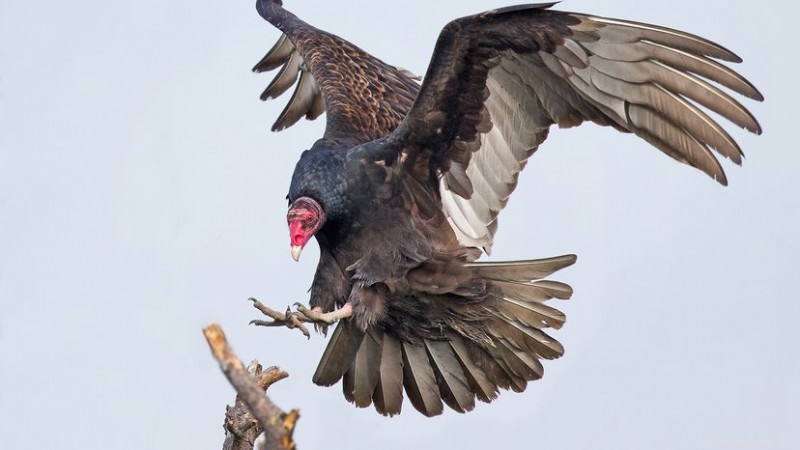
When identifying scavenger birds in the Americas, the black vulture and the turkey vulture often cause confusion. Although they share similar habitats, carrion diets, and nesting trees, their hunting strategies, flight patterns, and physical traits set them apart.
Appearance: Heads, Tails, and Feathers
Turkey vultures (Cathartes aura) are unmistakable with their bright red heads and longer, fan‑shaped tails. Their plumage is a warm brown that lightens on the underside, creating a subtle contrast when they glide.
In contrast, black vultures (Coragyps atratus) feature a dark gray head, a shorter tail, and predominantly black feathers accented by distinctive white patches near the wing tips. Their coloration offers a more subdued, “crawling” look.
While both species are attractive in their own right, the turkey vulture’s striking head color and larger wingspan often give it the edge in visual identification.
Flight Styles
Turkey vultures excel at soaring, using thermal currents to travel vast distances with minimal wing flapping. This energy‑efficient flight grants them an aerial advantage, allowing them to spot carcasses from high above.
Black vultures, however, flap more frequently and are less graceful aloft. They frequently follow turkey vultures to food sources, relying on social cues rather than solo scouting.
Food and Foraging: Smell vs. Sight
Turkey vultures possess a highly developed olfactory system, making them one of the few bird species that can detect carrion by smell. Their keen nose is a critical tool for locating food in dense forests and open plains.
Black vultures depend mainly on vision, often following turkey vultures to carcasses. When competition arises, black vultures’ aggressive behavior in large groups can give them the upper hand.
Both species consume a diet of flesh, fish, eggs, and other remains. Their cooperative and competitive interactions maintain ecological balance by rapidly disposing of dead matter.
Range and Habitat
Turkey vultures have the broadest distribution in the Western Hemisphere, ranging from southern Canada to Tierra del Fuego. They nest on the ground or in secluded spots, demonstrating remarkable adaptability.
Black vultures are more common in the southeastern United States and Latin America, often sharing perches with juvenile turkey vultures in places like Southern Illinois.
Despite overlapping territories, the two species fulfill distinct ecological roles: the turkey vulture as a solitary, scent‑guided scout; the black vulture as a social, visually oriented forager.
Collectively, these birds are vital to ecosystem health, rapidly recycling nutrients and reducing disease spread. Their presence underscores the importance of all scavengers, regardless of their popularity.
Article created with AI assistance and subsequently fact‑checked and edited by a HowStuffWorks editor. For more detailed information, see the Cornell Lab of Ornithology and the Turky Vulture guide.
- Frisian Water Dog (Wetterhoun) Behavior Guide
- Holiday Pet Safety Guide: Keep Your Furry Friends Safe This Season
- How Supporting Your Dog or Cat’s Gut Microbiome Boosts Health & Immunity
- How to Safeguard Your Dog from Firework Toxicity and Anxiety
- Effective Pain Relief for Dogs: Safe Medications & Holistic Solutions
- Bedlington Terrier Temperament & Care: Affectionate, Spirited, Intelligent
- Mastering Ball Python Humidity: A Proven Guide to Optimal Moisture Levels