

Persian Cats: Traits, Care, and History – The Ultimate Guide

The cat family is blessed with a lot of adorable species and as an animal lover, I can’t help but love them all. Unfortunately, my focus today is directly on the Persian Cat Breed, one of the loveliest long-haired cat in the world.
The Persian cat is one of the most popular cat breeds in the world and as such deserves to be discussed. This is why I have decided to give you ample information about it in my article today.
We would be discussing a little about its history, its characteristics, health issues and many more.
You might want to consider getting one after reading this.
So, let’s move straight to the main business!
Brief History of the Persian cat breed.
The Persian cat first originated from two places formerly known as Khorasan, Iran and Angora(now called Ankara in Turkey). It was then imported into Italy by Pietro Della Valle in 1620 where it became more popular.
After that, Nicholas- Claude Fabric de Peiresc from France imported the breed also into France in the same year. Soon, this breed extended to Britain.
The Khorasan breeds had Grey coats while the Angoran breeds had white coats.
By the time the Persian cat got to Britain, they had become a lot more popular and accepted. Soon, around the late eighteenth century, cat lovers had begun using them for cat shows that won awards. One of these shows were held in the Crystal palace in England.
By the nineteenth century, they had reached the United States where they rapidly became popular and loved. In no time, they were one of the most loved cats in the world.
The Persian cat began to develop and spread round to other countries. There was some initial disagreement between cat fanciers about the evolution of the breed. Some claimed that the ancient Persian breed was a lot different from the modern kind while others claimed it was evolution and migration that caused such theories.
Later on, by the early twentieth century, the Persian cat had become accepted as one breed irrespective of its origin because it was agreed that crossbreeding and evolution could have changed it but it would remain known as the Persian cat.
Let us see some peculiar features/characteristics of this animal.
Physical Characteristics of the Persian Cat Breed.
Just like every other cat, the Persian cat has a lot of unique features and as such, we would be mentioning some of there here.
Appearance: This is the physical traits you can see in the cat. It comprises of all notable body parts that make the cat what it is. They include:
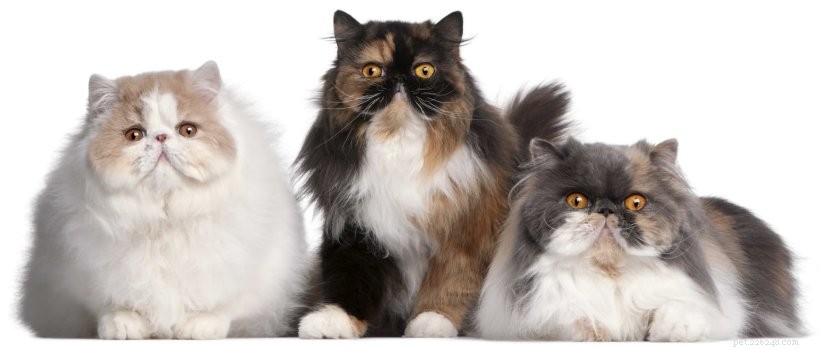
Head: The Persian cat has a big round head with a set of large wide-spaced eyes.
Neck: Due to its original round nature, the Persian cat’s neck is almost invisible as its long coat covers a lot. It is also full and round.
Coat: They are naturally long and thick-coated cats. The first set of Persian cats had very long coats that covered up every part of their round body and made it almost impossible to see some parts. Years later, even after crossbreeding, these cats still maintain their coat type which keeps them warm and shielded from weather changes.
Due to the thickness of their coat, it might be hard to get deep under and do good grooming. As opposed to their initial grey and white colours, the Persian cat’s coat now has a lot of colours.
Legs: They have short legs also due to their round nature.
Weight: The average female Persian cat weighs about 3.5-5.5kg while the males can weigh up to 6 kg.
Height/Size: The Persian cats have a height range of about 10- 15 inches generally.
Energy Level: Their energy level is quite on the average level. They are not the most active or playful cats. They would rather be left alone than be disturbed. Although, they are good for cat shows and are quite active in the early hours of the morning. They show their energy levels when you least expect it.
Life Expectancy: A Persian cat can live for as long as 17 years and according to researchers, the average age most Persian cats have lived to is 13 years.
Personality Traits of the Persian Cat Breed.
The Persian cat Breed has some unique traits. Being a very ancient breed, there are lots of traits that make it stand out from others. They include:
The cat commands an air of royalty. Right from the eighteenth century, its breed was associated with the royal family of England and so over the years, it became a natural trait for it. It carries itself with so much poise and confidence with a lot of grace.
It has a very sweet and gentle nature. It has no time to be rushed into anything. It is a very relaxed and calm animal.
It enjoys being cuddled and carried. One of the basic traits of this cat is its love for attention. It enjoys being pampered and taken care of.
It tends to be lazy. The Persian cat isn’t one to be moved to work or play. It enjoys its own space and pace.
The Persian breed can be hard to train. Since it has a very relaxed nature, it is usually opposed to changing its ability or enhancing it.
It enjoys staying on its own. It doesn’t require the presence of other cats to thrive.
Naturally, they are easygoing adorable pets. They won’t stress you if you don’t stress them.
Moving on, let us check out how to take care of them.
How to care for the Persian Cat Breed.
If you own one of them or you intend to own one, you should take note of the following.
Feeding
This should be the first thing you should take note of while caring for a Persian breed.
Their food must be rich in all the nutrients and minerals necessary for the smooth and healthy growth of a cat. It is important that they get as much protein and fibre as they can.
Most of them are usually chubby and weigh a lot, so it is best you cut down their fat and carbohydrate intake to avoid them adding so much more weight. They are not particularly the kinds to exercise out their fat, so if they have a lot, it might be detrimental to their health.
Due to their quiet nature, some of them might have to be indulged to eat. This means you might have to trick them to eat. So, you would have to devise a means to get them to eat without force. Look for foods and Treats that work with them or map out a feeding structure for them. Try to feed them at least thrice a day including Treats.
Lastly, be sure of the kind of food that works with your cat; be it raw, wet or dried. Know what kind can digest easily for them because they hardly move around, to avoid complications.
Exercise
As mentioned earlier, Persian breeds are a lazy kind. They do not like to be disturbed but it is important you exercise them from time to time to avoid them getting too fat or not being able to do regular simple tricks and movements.
You can take them for walks and runs. You can take them out as often as you run errands so that they can also be aware of their environment.
Creating playtime should also be essential. Instead of them napping all the time, you can force them to play so they can be a lot more active than calm.
Make them run for their Treats, a ball of wool, soft toys and things they love to play with.
Make routine exercise time that works with them according to their age.
Environment
Since we already know that Persian cats love to snuggle in a corner and sleep easily and that they love to stay in quiet areas, it means that their environment should always suit them.
Make sure their play and sleep area are always neat and free from germs.
Keep them in very warm areas. Avoid leaving them out in the cold or heat for too long.
Do well to keep harmful objects away because they are prone to drifting off wherever they are.
Also, the environment must be neat because they move from one cosy spot to another and onto your laps. it is important you get rid of germs in all cosy spots, so they don’t pass germs onto your body.
Grooming
All parts of the cat must be taken care of. From its head to its paws, so it is essential you get all accessories needed to groom it well.
Persians have natural long coats that can easily get matted and tangled. It is important you take care to brush out their fur daily either with aiding liquids or without. You can bathe them once a week or month to also reduce shedding. They shed a lot of coat, so do well to use the right products while brushing and bathing them to avoid causing them pains.
Also, regular trimming of nails is advised. Don’t wait till their nails have grown out so long and they begin to scratch you or your furniture before you trim them. Again, use products that are friendly to them to avoid complications.
Pay attention to their dental hygiene also to know when their teeth need a check-up or cleanout.
Be conscious of their eyes during bathing. Their eyes are usually sensitive. So make sure the shampoo doesn’t enter their eyes and wipe frequently.
Clean out their living area and litter box daily. It is highly important to avoid disease transmission within your household because they love living inside.
Problems Associated with the Persian Cat.
Environmental problems:
Persian cats do not like being out of their comfort zone, so if you have to move about as an owner, you might not be able to handle one. Changing the environment can cause them to be restless and sometimes sick.
Training Problems:
If you need a cat you can train for various energetic activities, this breed might not be a good option. You can use them for limited activities.
Health Problems:
There are quite a number of health problems associated with this breed due to their round and ancient nature. They include:
Polycystic kidney disease: This is the common health issue with them. It has to do with the kidney malfunctioning at a certain age causing them to become weak and maybe die. It is usually genetic.
Cancer: This affects the cat gradually and if not noticed early might blow up fully and lead to death.
Obesity: This happens due to overweight and can cause other complications like stroke and arthritis and loss of agility.
Dental disorder: can happen as a result of lack of attention to the teeth.
Progressive retinal atrophy: causes the eyes to swell up abnormally.
Eye-watering: can be caused by wrong bathing shampoos contaminating the eyes or by generic issues.
Other issues include; excessive shedding, stomach infections, allergies, anaemia and breathing difficulties.
Is the Persian Cat useful?
This breed is actually an amazing kind. There are lots of good sides to it. If you are a calm person and need a quiet pet, this should be suitable for you.
Just be ready to put up with a few over calm moments or a few over-energetic times but overall, it is a good companion and a calm playmate.
Conclusion
Owning a Persian cat isn’t a lot of work after all. Just be a neat and tidy person for your pet and you are good to go!
I hope you have learnt a lot about them today.
Let me know if you would love to own one or not in the comment section and please share your gained knowledge with others!
- Pet Behavior
- Pet Breeds
- Pet Names
- Pet Adoption
- Pet Training
- Cat Stories
- Pet Health
- Adorable Pets
- Cats
- Discover the Turkish Angora: Traits, Temperament & Care Guide
- Nebelung Cats: Traits, Care, and Health Guide
- Persian Cat Breed Profile: History, Care, and Health Guide
- The Complete French Bulldog Guide: History, Traits & Care
- Savannah Cat Breed Overview: Traits, Care, and History
- Munchkin Cat Breed Profile: Characteristics, Personality & Care
- Ragdoll Cats: A Comprehensive Guide to Their History, Traits, and Care