

Ragdoll Cats: A Comprehensive Guide to Their History, Traits, and Care
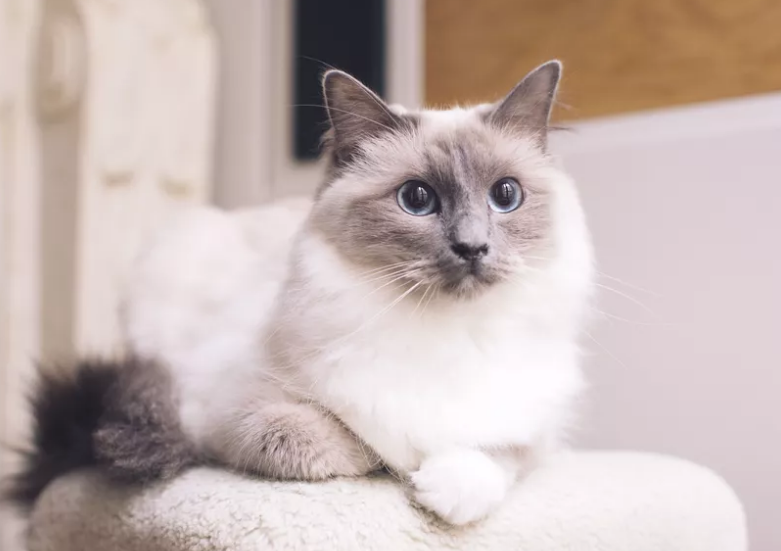
I never believed I could have a cat as a pet until I met the Ragdoll Cat breed, and I fell in love. It was after my dear Joggy died. I needed a new companion and when my mum suggested a Ragdoll cat, I wasn’t so sure.
For very long, I worked with the mindset that cats are not easy to live with. But the Ragdoll Cat breed changed my mind. This article is all about this cat breed. You must have heard about it as well.
We’ll discuss its history, physical characteristics, personality traits, health risks, and more.
If you are ready, let’s jump right in.
Brief History OF Ragdoll Cat Breed
Many years ago, as far back as the 1960s, one Ann Baker in California bred a white hairy female cat to a black/white male cat with white paws. They produced a solid black male, a bicolour seal-point female, and a longhaired brown male. After these kittens mated, the Ragdolls came into being.
They were given the Ragdoll name because of the cats’ propensity to relax in a lap or be carried around without resistance. This breed is recognized by the Cat Fanciers’ Association, the International Cat Association, and the American Cat Fanciers Association.
The Ragdoll cat breed is very popular. As of 2017 in the Cat Fanciers’ Association registration stats, the breed ranked second following Bengal.
Quite interesting, right? Keep reading!
Physical Characteristics Of The Ragdoll Cat Breed
Needless to say, the physical characteristics of the Ragdoll cat contribute to what makes it adorable. These characteristics include:
1. Beautiful blue eyes: the natural eye colour of the Ragdoll cat is blue. However, the blue colour may be in various shades for different cats. Also, some cats may be a mixed breed resulting in a different eye colour like green or yellow. So cute!
2. Large body: you may not be able to tell it from the photos but Ragdolls are large. They have big bodies and medium to long coats. Ragdoll cats are one of the largest breeds of domestic cats. They can weigh up to 20 pounds without being obese.
3. White at birth: Ragdoll kittens are pure white when they are born. As they grow, their colour patterns develop gradually. You can easily predict what the colour pattern will be by looking at their parents.
4. Slow-maturity: Ragdoll cats mature slowly. It takes about 4 years before they are considered adults. Within this period, they keep growing in size without reducing the changes in their fur pattern. Some even wait until 5 years before attaining adulthood.
5. Longevity: These lovelies can live as long as 15-20 years. They are one of the longest living cat breeds.
6. 4 patterns: There four patterns of the Ragdoll cat namely_
- Bi-colour (evenly distributed ‘white and solid colour’)
- Van (white with small spots of darker colour at the top of the mask, on the ears and tail and sometimes on the body)
- Mitted (four white paws, a white chin, and a white belly stripe)
- Colourpoint (classic pointed markings in solid, lynx, tortoiseshell or tortoiseshell and lynx, with no white on the coat).
And these patterns display six colours majorly: Seal, Blue, Chocolate, Lilac, Red, and cream.
Personality Traits of The Ragdoll Cat Breed
In addition to their unique physical characteristics, Ragdoll cats have certain personality traits that make them endearing. These personality traits are:
- Dog-like personalities: Ragdoll cats display certain dog personalities like loyalty and playfulness.
Your Ragdoll cat can wait patiently at the door for you to come to join him play. He will also show some excitement whenever you return home.
Just like a happy puppy, your ragdoll cat will most likely carry his toy in his teeth, walking around the house while wagging its tail. They naturally play the fetch game; no training needed.
Talking about loyalty, these cats remain loyal to their families and enjoy their human company.
- Quiet personality: ragdolls can be quiet to a fault. Their quiet nature can be a good thing for calmness in the house. On the other hand, it can be misleading because you would not be able to detect when they are in distress or pain.
There are exceptions though. Some Ragdolls are not as quiet as the others.
- Easy to please: the Ragdoll cat is not very demanding. Most of the time, the cat is content with simple affection. It can tolerate almost any situation.
Don’t you just love this cat? Keep reading to learn more!
How To Care/Groom Your Ragdoll Cat
Since Ragdoll cats are a special breed, they require special attention. And you want to give them the care they need. It will help boost companionship and create beautiful experiences.
Here are a few tips:
-
Build A Routine For Your Ragdoll Cat
Generally, a healthy diet and regular exercise will improve the health of your cat. You want to bear that in mind as you build a routine for your pet.
The essence of building a routine is to make sure that no stone is left unturned. So, take the time to plan your pet’s routine and include it in your schedule.
Your Ragdoll cat’s routine should include:
- Brushing of teeth and brushing of fur
- Playtime/ exercising hours
- Sleeping hours
- Medical examination days at the vet’s
When you help your pet maintain a healthy routine, he will lead a happy long life.
-
Supervise Your Ragdoll Cat Regularly
In addition to building a healthy routine for your cat, you should supervise him regularly. This will help you detect any changes in time and take quick action.
You know how a mother would regularly check on her kids; inspect their rooms and monitor their activities to be sure that everything is under control. That’s the idea here.
You should help your ragdoll stay away from trouble. And you can achieve that with regular supervision.
There will not be unsuitable surfaces to jump from or poisonous substances/harmful objects entering the mouth.
So, leave den doors closed, remove stray objects from the floor, and retrain movement into other rooms as necessary.
-
Personal Hygiene For Your Ragdoll
This is very important for your Ragdoll cat. Because your cat has long fur, it is needful that you brush him daily.
And his teeth too. You can brush them twice weekly so that they remain strong and free from germs.
Also, clean his ears weekly to remove wax or debris. This is one way to prevent ear infection. See how to do it here.
-
Help Him Maintain A Clean Environment
This is a further step from personal hygiene. Your cat is naturally clean and you want to keep it that way.
Ensure that the litter box is always clean. You should also scoop any waste daily. Additionally, your cat’s bedding ought always to be clean, etc.
-
Encourage The Hunter In Your Ragdoll Cat
As you already know, your cat is a carnivore. Therefore, creating situations that will stimulate his hunting instincts will do him a lot of good.
You can achieve that during your playtime with him. Games like hide and seek, and the feather chase is a good start. Engaging him with high-activity toys is also a good option.
Play sessions are necessary to keep your cat’s mind and body active.
-
Feed Your Ragdoll Cat The Right Meals
Earlier, we mentioned that a healthy diet is needed to improve your cat’s life. Adding to that, adequate water should not be missing in your cat’s diet. Try adding ice cubes or a flowing fountain to encourage him to drink more water.
Depending on your cat’s age, endeavour to get the appropriate food for him, and a high-quality one too. Go for canned meals as they m0re rich in protein.
(You can read our article on the 17 Best Wet Cat Food here for the best options)
-
Report Any Disturbing Changes
Whenever you notice any changes in your cat that makes you uncomfortable, do well to report to your vet immediately. You never can tell how serious the problem is all by yourself. Do the needful and in time to get solutions.
Call your vet when there is:
- a change in appetite
- bad breath, red gums, or broken teeth
- itchy skin or hair loss
- lethargy or too much sleep
- fearfulness/aggression
- small red or swollen lumps, etc.
Other tips are:
- If you are receiving your Ragdoll cat for the first time, provide him with a safe and cosy hiding place as he tries to get used to his new environment
- Show him unparalleled attention
- Get him lots of toys especially balls
- Send him for regular vaccinations (you can get pet insurance to manage the cost).
- Keep him safe indoors. He has no business outside.
- Protect him from mischievous children and other pets.
Seems like a full-time job, right? (Smiles). You do owe your Ragdoll cat all the love in the world.
Let’s continue!
Associated Health Risks
You may not like this but there are certain health risks associated with your Ragdoll cat. And it is good that you know these risks. They are:
1. Feline hypertrophic cardiomyopathy
This is a health problem characterized by the thickening of the heart walls. Though some cats show no symptoms, common signs of this disease include anorexia, lethargy, breathing difficulty, coughing, fainting, and paralysis of the legs.
It can lead to death and this disease is usually inherited. Adult male cats are the most affected.
The disease is difficult to diagnose as the first symptom in most cases is sudden death. However, if it is discovered via an echocardiogram, it can be treated with medication.
(Ps: echocardiogram is a test that uses ultrasound to display how the heart muscles are working)
2. Dilated And Restricted Cardiomyopathy.
A Ragdoll cat suffering Dilated or Restricted Cardiomyopathy will die if it is not discovered and treated in time. Dilated cardiomyopathy results from the dilation of the heart muscles while restricted cardiomyopathy is caused by weakened elasticity of the heart muscles.
3. Blood clots.
Blood clots in the arteries is a likely occurrence in the Ragdoll cat breed. But it can be treated. Common symptoms are breathing difficulties, loss of appetite, weakness, depression, and sometimes fainting.
4. Gum disease
This is very popular in Ragdolls hence you should send your cat for examination regularly. It is also a good reason why you should brush your cat’s teeth as we saw earlier.
Gum diseases can be life-threatening. Poor teeth habits can also lead Periodontitis, a condition that predisposes your cat to kidney and heart problems.
Before we go, let’s look at common myths surrounding Ragdoll cats. Read on!
Common Ragdoll Myths
- They are not cuddly
Ragdolls are cuddlers and love to be held but not all are like that.
- They are not hypoallergenic
Allergies caused by cat saliva are also a cause of worry for Ragdolls
- They don’t shed
Ragdolls do shed but less.
- They don’t feel pain
Ragdolls do feel pain. They also have a hard time showing it
- They are deaf
Ragdolls are not deaf (their blue eyes notwithstanding). They are not pure white breeds you know.
Conclusion
Now we have come to the end of our discussion on Ragdoll cats. Hope you enjoyed your read. Have any questions or comments? Drop them in the comments section right away.
Also, share this post with friends. Thanks!
- Pet Behavior
- Pet Breeds
- Pet Names
- Pet Adoption
- Pet Training
- Cat Stories
- Pet Health
- Adorable Pets
- Cats
- The Complete French Bulldog Guide: History, Traits & Care
- Golden Retrievers: A Complete Guide to Their History, Traits, and Care
- Persian Cats: Traits, Care, and History – The Ultimate Guide
- Savannah Cat Breed Overview: Traits, Care, and History
- Munchkin Cat Breed Profile: Characteristics, Personality & Care
- Bengal Cat Breed: History, Personality, Health & Care Guide
- The Chihuahua: A Comprehensive Guide to Traits, History, and Care