

Munchkin Cat Breed Profile: Characteristics, Personality & Care
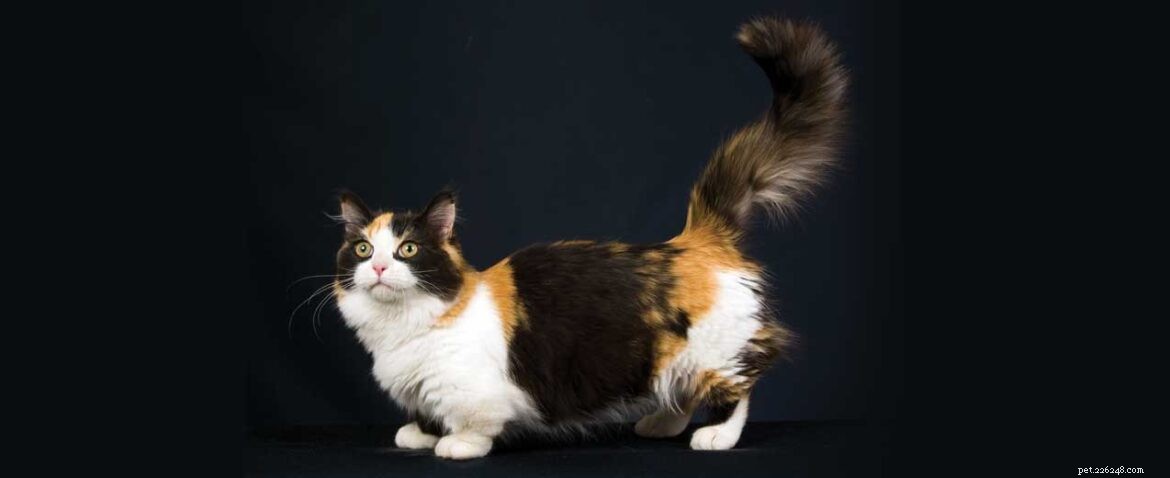
Honestly, the first time I came across the picture of a Munchkin cat, I had to look twice to be sure I was seeing a cat.
Indeed, nature never fails to display its variety-ability. My fascination with these short-legged fur babies got the best of me and I decided to write about them.
If you have been intrigued by this breed as well then you should read this Munchkin Cat Breed Information to the end.
I discussed its history, appearance, temperament, and more.
Without any further ado, let’s paw in!
History of the Munchkin Cat
This cat breed is said to have originated from the U.S. However, its history dates back to the 1940s when a veterinarian listed different varieties of short-legged cats in the U.K. But somehow, these cats were not found after World War II.
It was not until 1983 when Sandra Hochenedel found a short-legged cat in Louisiana, did this breed come to the limelight again.
She bred the cat with a domestic cat and the kittens were half long-legged cats and half short-legged cats. Afterwards, she gave one of the male short-legged kittens to a friend, who also bred it with another cat, and the outcome was the same.
Thus, these short-legged cats have come to stay. The name – Munchkin was given to this cat in America following the ‘little people’ in ‘The Wizard of Oz’.
Now, the short-legged nature of this breed is due to a gene mutation. No human selective breeding is responsible. Just like what is found in the Dachshunds and Welsh corgis dog breeds.
This mutation is the reason some persons have opposed the recognition of this breed. They fear that the mutation may have some associated diseases.
So far, they have been wrong as the Munchkin cat appears to live a full healthy life on their short legs.
It was also discovered that when Munchkin cats are bred with fellow Munchkin cats, it is usually lethal. Thus, they are only bred with domestic cats that do not belong to any recognized cat breed.
Interestingly, only those kittens that have short legs have the gene mutation.
In 2003, the Munchkin cat breed won the International Cat Association championship status. Impressive, huh?
Moving on, we’ll see the physical characteristics and temperament of this breed.
Tag along!
Physical Characteristics Of The Munchkin Cat Breed
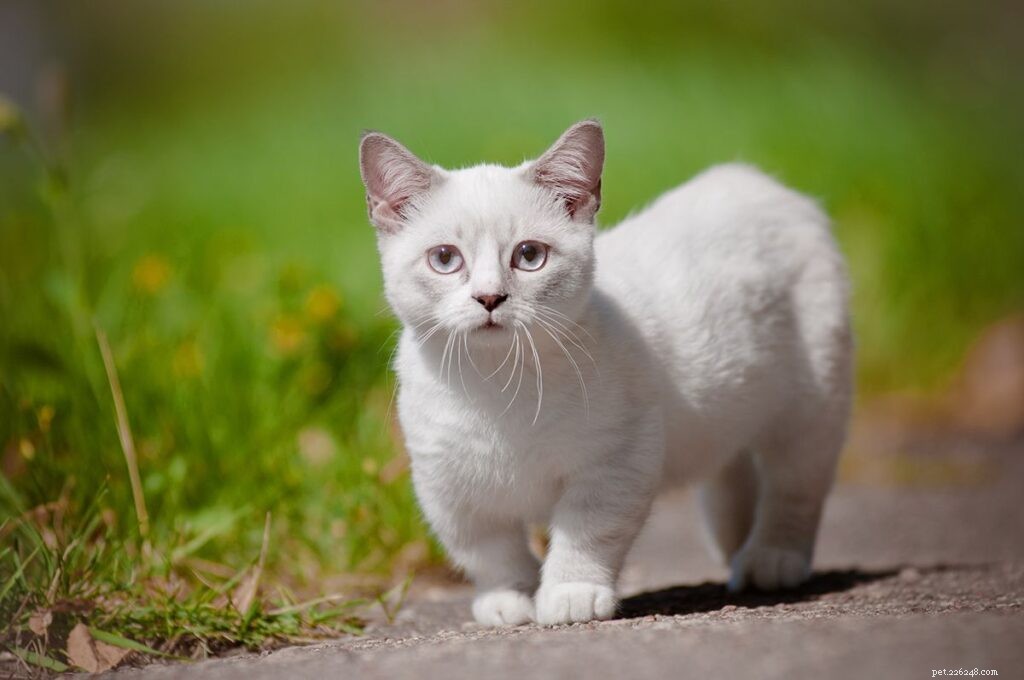
The first part of the Munchkin cat you will easily notice is its short legs. Their legs are about 3 inches shorter than the legs of an average cat. As a result, these cats are very close to the ground when standing on all fours.
Another spectacular feature is their long spine. This gives them a rectangular shape when you view them from the side.
As regards their coat, the Munchkin cat can be hairless, short-haired, medium-haired, or long-haired. And there is no peculiar colour for the coat of this breed. But the most common shades and patterns are calico, solid black, tabby, and grey.
Usually, the short-haired Munchkins have lush medium-density coats, while the long-haired cats have soft and smooth fur.
Observing the face of a Munchkin cat reveals a broad head with walnut-shaped eyes and triangular ears. The eyes can take any colour, brown, green, blue, yellow, you name it.
An adult Munchkin cat weighs between 6 – 9 pounds. Overall, the cat is about 1 ½ ft. long.
Personality/ Temperament
The Munchkin cat is very friendly and energetic. Their short legs notwithstanding, these cats can run very fast. They enjoy playing games like fetch.
Most times, they cannot hide their curiosity as you will always see them exploring their environment.
This cat breed loves their human companion and will not mind cuddling up when they are not playing.
Training the Munchkin cat is easy as they are relatively well-behaved and highly intelligent. You can teach them to obey commands and you will be satisfied with the outcome.
Also, this breed has a medium tendency to vocalize, so do not expect loud meows when they are irritated or stressed. They also won’t shed much.
Munchkin cats relate well with children and other pets because of their playful and friendly nature.
They also like to stack away shiny objects which they will play with later.
Next, we’ll look at how this unique cat should be catered for.
Keep reading!
Care For The Munchkin Cat Breed
Following its calm nature, the Munchkin cat will do well under indoor living conditions.
As mentioned, this cat breed is energetic and loves to play. Therefore, one thing required to keep them healthy and happy is ample space.
They need space to run to and fro. It will also help to add different interesting objects like cat trees (with a low entrance), scratching posts, laser toys, feather toys, and the likes. Platforms like small chairs will also make a great combo since these cats love to jump.
Also, playtime with children, other pets, and adult companions will make this cat very happy. Leaving them on their own will simply be starving their affectionate hearts. Whenever you can, take your cat for a walk (a leash is a good investment).
And you know how exercising is important for a healthy cat, therefore, do your best to provide your cat what he needs for a worthwhile experience.
Secondly, the Munchkin cat requires grooming like other cat breeds. This activity largely depends on the nature of your cat’s coat.
A short-haired Munchkin will be fine with a weekly brush. The long-haired Munchkins will do better when they are brushed at least twice a week so that their hair doesn’t tangle.
Because of its short legs, cleaning itself may be challenging for this cat breed. Thus, occasional bathing is very welcome.
Additionally, these cats are in the best condition when their nails are well-trimmed. So, nail trimming should be included in their hygiene/grooming routine.
Also, regular brushing of teeth and cleaning of the ear and eyes will help your Munchkin maintain proper hygiene.
Concerning diet and nutrition, the Munchkin cat needs quality food to be at optimum health. Feed him high-quality cat food from the best brands. Wet cat food is usually preferred over dry cat food. However, mixing things up is not a bad idea.
He also needs fresh drinking water daily. As you do your best to provide your cat with food and water, endeavour to do so in bowls with low edges. That way, your Munchkin will have easy access.
This also goes for his litter box. It should be as low as possible.
Your veterinarian will be a great help in choosing the food that will meet your cat’s needs.
Note: you must not overfeed your Munchkin cat. Obesity may be more difficult to deal with because of their short legs. Always give them the appropriate food quantity for their age, size, and activity level.
In the next section, I discussed the health problems associated with this breed.
Keep reading!
Common Health Problems Associated With The Munchkin Cat Breed
The Munchkin cat breed is a very healthy breed with a life expectancy of 12 to 15 years.
No diseases are peculiar to this breed. Once you have given your cat the necessary immunization/vaccination recommended for a domestic cat, he is good to go.
However, the Munchkin cat can also suffer health problems that are common to domestic cats including:
• Hyperthyroidism – increased levels of thyroid hormone in the blood that results in weight loss, excessive thirst, diarrhoea, frequent urination, hyperactivity, panting, and increased shedding.
• Pancreatitis – an inflamed state of the pancreas characterized by lethargy, dehydration, anorexia, and low body temperature.
• Uremia – a kidney disorder or prolonged urinary tract obstruction. Its signs include vomiting, weakness, anorexia, depression, anaemia, oral ulcers, hypothermia, muscle tremors, melena, and seizures.
• Feline lower urinary tract disease (FLUTD) – refers to a variety of conditions that affect the bladder and urethra of cats. Common signs of FLUTD are increased urination, difficulty, and pain when urinating, and blood in the urine.
• Lymphosarcoma – cancer of the lymphocytes (a type of blood cell) and lymphoid tissues.
• Heart problems like cardiomyopathy.
Whenever you notice any of these signs above, do well to inform your vet for an immediate solution.
Conclusion
The Munchkin cat breed is very lovable. With proper care, he will make a good family member and an interesting companion.
We have come to the end of our discussion on the Munchkin Cat Breed. I hope you enjoyed the read.
Now tell me, would you adopt the Munchkin cat? Perhaps, you already own one, what has been your experience living with your Munchkin.
Let me hear your thoughts in the comments section right now.
Before you go, share this post with your friends, thank you!
- Pet Behavior
- Pet Breeds
- Pet Names
- Pet Adoption
- Pet Training
- Cat Stories
- Pet Health
- Adorable Pets
- Cats
- Discover the Turkish Angora: Traits, Temperament & Care Guide
- Nebelung Cats: Traits, Care, and Health Guide
- Oriental Shorthair Cats: Key Traits, Care, and Adoption Tips
- The Complete French Bulldog Guide: History, Traits & Care
- Persian Cats: Traits, Care, and History – The Ultimate Guide
- Savannah Cat Breed Overview: Traits, Care, and History
- Ragdoll Cats: A Comprehensive Guide to Their History, Traits, and Care