

Understanding Cat Obesity: Causes, Risks, and Prevention

Feline obesity is generally regarded as a nutritional disorder among domestic cats. According to experts, a cat is called obese if its weight exceeds the normal range by 20% or more. It is such a common problem among cats that 35% of the feline population in the US are suffering from it. Cat obesity must be taken seriously because it makes your pet lethargic and compromises his/her quality of life.
Table of Contents
What are the causes of feline obesity?
Excess body weight is directly related to an imbalance between dietary intake and physical activity. For this reason, cats tend to naturally restrict their diet according to their physical activity and energy needs. But sometimes, they fail to maintain this energy balance and suffer from obesity. The following are some of the most common factors that contribute to cat obesity.
- Less physical activity
- Free feeding
- Medication side effects
- Underlying medical condition
- Decreased metabolic rate due to neutering
Risk factors for cat obesity
The degree of feline obesity varies greatly among different breeds as some are more prone than others. Similarly, several factors cause or contribute to feline obesity. The most common risk factors for obesity in cats are listed below.
- Breed
- Sex
- Age
- Free feeding
- Type of diet
- Environment
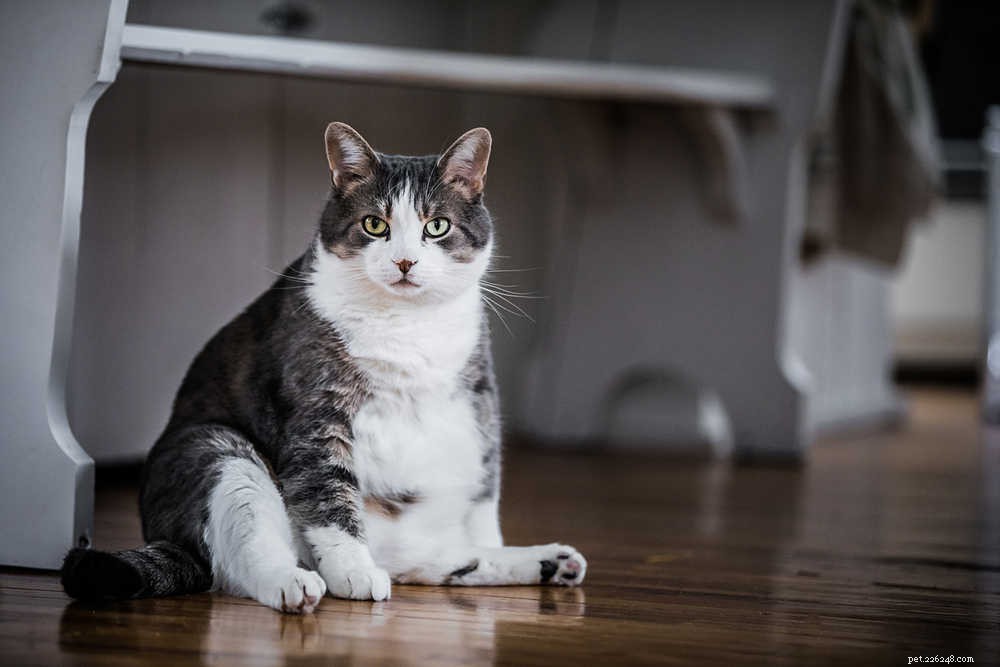
Signs of feline obesity
It can be difficult to identify the symptoms of obesity in cats, especially if you own a heftier breed. This is because obesity is not only the measure of a cat’s weight. Instead, you also need to consider the varying body shapes and sizes of different cat breeds.
For instance, Siamese or Abyssinians are leaner than most mixed breeds. Consequently, any change in their body weight can be readily observed. Contrastingly, it can be hard for owners of chubbier cat breeds to realize that their kitty is getting fat. Having said that, some common symptoms of feline obesity are as follows:
- A clear bulge on both sides of the body
- A distended abdomen that shakes side by side when the cat walks
- Lack of physical activity
- A roundish body profile with unobservable waste-line
- Heavy fat-deposits on the face, limbs, and the lumber area
- Spine and ribs cannot be felt while patting
Frankly, for me, the most obvious sign of feline obesity is a roundish body profile with unobservable waste-line with a hanging stomach not related to having kittens.
Diagnosis of feline obesity
The most common method for the assessment of obesity in cats is a complete physical examination. The vet will consider all the relevant factors to determine whether your feline is obese or not. It’s important to get professional help because cats of different breeds and ages have to meet diverse standards.
For instance, if the weight of a cat is 20% more than the ideal body weight, he/she is obese. Veterinarians use a body condition scoring scale to judge the physical fitness of each cat. It measures the cat from 1-5 (3 being normal). The score of 1 indicates that a cat is extremely thin while 5 indicates obesity.
- Pet Behavior
- Pet Breeds
- Pet Names
- Pet Adoption
- Pet Training
- Cat Stories
- Pet Health
- Adorable Pets
- Cats
- Understanding Cat Conjunctivitis: Causes, Symptoms, and Effective Treatments
- Understanding and Managing Cat Hairballs: Prevention, Symptoms, and Treatment
- Essential Guide to Cat Vaccinations: Protect Your Feline’s Health
- The Ultimate Guide to Catnip: How It Affects Your Cat
- Bacterial Cat Eye Infections: Causes, Symptoms, and Care
- Comprehensive Guide to Cat Constipation: Causes, Symptoms, and Treatment
- Comprehensive Guide to Cat Worms: Prevention, Symptoms, and Treatment