

The Eastern Newt: A Comprehensive Guide to Subspecies, Hybrids, and Pet Care – Part 1
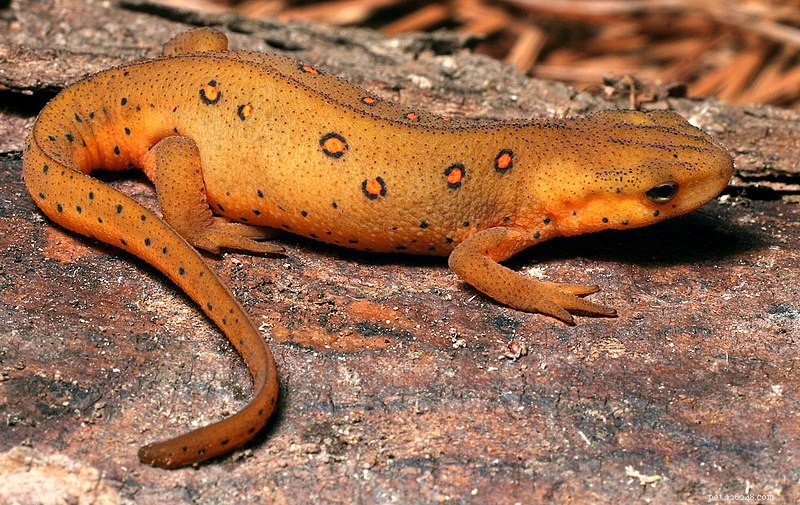 The Eastern Newt (Notophthalmus viridescens) is, in most parts of the USA, the salamander most likely to be encountered in either the wild or in pet stores. It is a wonderful species for beginning hobbyists, yet has such a complicated life style that even long-experienced herpetologists remain interested in keeping them.
Many unusual hybrids, varying color phases and related species have found their way into captivity. Today I’ll touch on their care and feeding; I’ll discuss some of the many types available in Part 2.
The Newt Aquarium
Newts in the adult, aquatic phase are simple to maintain at home. Typical room temperatures suit them well – they are more tolerant of warmer temperatures than are most salamanders, and also remain active at 50-55 F.
An aquarium equipped with a small filter, resting platform and screen cover will meet their needs. Eastern Newts are not destructive to complicated setups, so elaborate habitats containing live plants can be arranged.
Captive breeding is possible, with normal fluctuations in home temperatures often being enough to stimulate reproduction…please write in for further information.
Diet
Unlike most amphibians, Eastern Newts thrive on relatively simple diets comprised of dry foods – Reptomin with Shrimp http://www.thatpetplace.com/pet/group/2548/product.web is an excellent choice as a staple; blackworms, guppy fry, chopped earthworms, brine shrimp and small insects are appreciated.
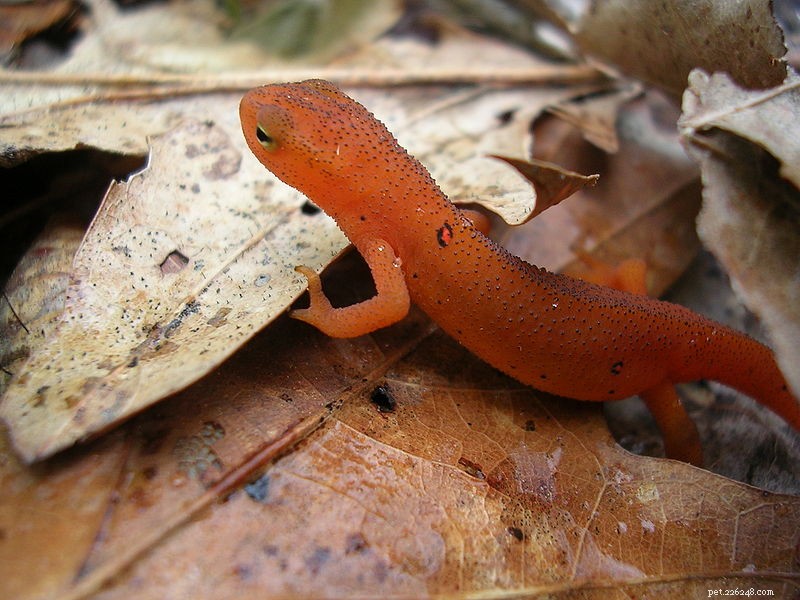 Most Eastern Newt populations pass through a 1 to 3 year-long terrestrial stage, during which time they are known as Efts. The orange or red Efts (please see photo) consume tiny crickets, blackworms, sow bugs, chopped earthworms, and whatever tiny invertebrates might be collected, but will not usually accept dry foods.
Related Species, Subspecies and Hybrids
The Eastern Newt is part of an interesting complex of several species and subspecies within the family Salamandridae. Most average 4-5 inches in length and inhabit quiet waters supporting heavy plant growth.
Their color ranges from tan through dark brown to nearly black, and most sport black-rimmed red dots and broken or continuous red stripes along the dorsal surface. The abdomen is yellow to orange. Adult males develop hind legs that are noticeably thicker than those of the females.
Most Eastern Newt subspecies and even related species interbreed with one another in the wild and captivity, giving rise to animals with a variety of unique color patterns.
- Eastern Newts' Diet: What They Eat in the Wild and as Pets
- 2021 Pet Events Guide: Top Celebrations & Upcoming Activities
- Mastering Newt Care: Natural History & Captive Management – Part 1
- Breeding the Green Basilisk (Plumed) and Related Species – A Comprehensive Guide
- Eastern Newt Subspecies & Hybrids: A Pet Owner’s Guide – Part 2
- Greek Tortoise: The Ideal First‑Time Pet Tortoise – Care Tips & Insights
- Newt vs. Salamander: Understanding Their Key Differences