

African Rainbow Skinks Begin Breeding in Florida, Expanding Exotic Herp Populations
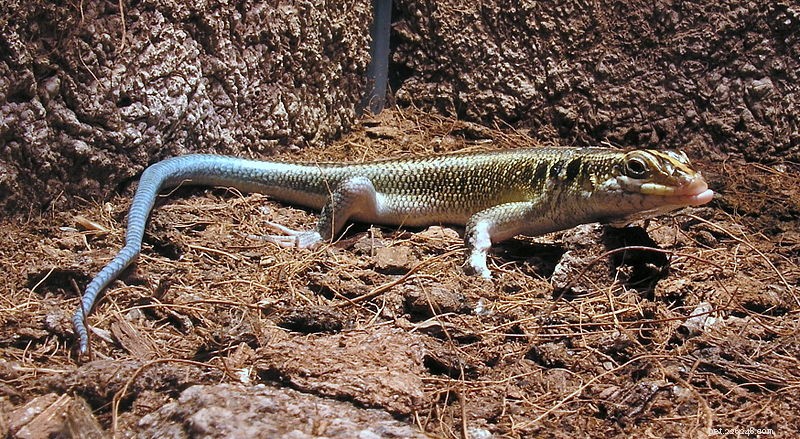 A breeding population of African Five-Lined or Rainbow Skinks, Trachylepis (formerly Mabuya) quinquetaeniata, has been discovered in Port St. Lucia, Florida, bringing the total number of exotic herps known to be established in the USA to 66. The Giant or Green Ameiva, or Jungle-Runner (Ameiva ameiva), known to the state since 1954, seems to be expanding its range.
Florida’s Newest Exotic
Rainbow Skinks, which are native to a broad belt of Sub-Saharan Africa stretching from Senegal to Kenya, are the newest of Florida’s many exotic animals. Well-known in the US pet trade, the recently discovered population seems limited to a weedy lot near a now-defunct reptile importing business. Past reports of dead and dying skinks found on the importer’s property point towards the all-too-common source of the new arrivals.
According to a recent (September, 2010) article published by the Center for North American Herpetology, the lizards were first collected in April of 2010 by University of Florida researchers. Forty-six individuals, including a number of sexually mature and very young animals, were observed.
Ameivas on the Move
The Giant Ameiva (described by many as “Tegu-like” in form and action) has long been a pet trade staple, despite the fact that it is a high-strung lizard that requires a spacious enclosure if it is to thrive and breed. However, they feel right-at-home among Florida’s fields, gardens, lots and canal banks.
Dade County has hosted a large population since 1954. A recent survey by the Florida Fish and Game Commission (please see article below) has revealed that Giant Ameivas are also being found in increasing numbers in Broward County, Palm Beach and the Corkscrew Swamp. Capable of tackling insects, other lizards, frogs, nestling birds and small mammals, Giant Ameivas likely represent a significant threat to native wildlife.
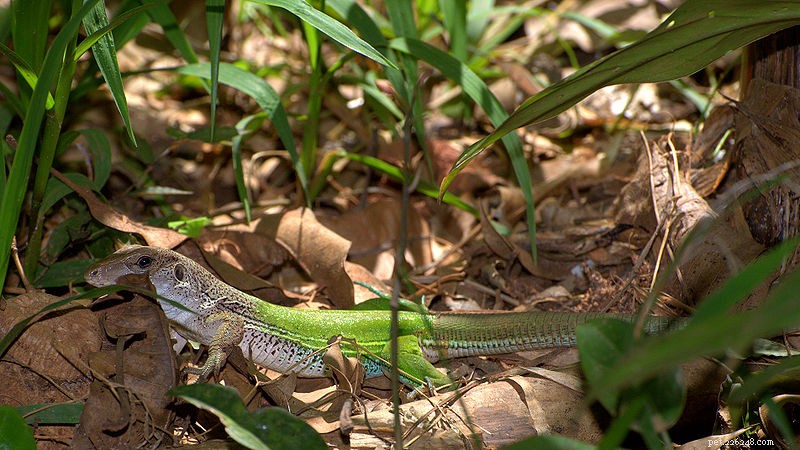 Florida’s Giant Ameivas occur in 2 rather distinct forms, being either dark-colored or brightly-marked in green. Males in the darker population may exceed 2 feet in length, while green individuals top out at 18 inches or so. Biologists have yet to determine if different species or subspecies are present.
- Giant African Land Snails: Facts, Risks, and Pet Ownership Guide
- Blue‑Tongued Skinks: Expert Care & Breeding Guide – Part 2
- Keeping & Breeding Blue‑Tongued Skinks – A Practical Guide (Part 1)
- New Study Confirms Breeding Populations of African Rock Pythons in Southern Florida
- Historic First: North American Captive Breeding of the Giant Horned Lizard
- Alert: African Rock Pythons Potentially Establishing Breeding Populations in Southern Florida
- Mastering African Clawed Frog Breeding: Proven Techniques & Care