

Safe Ant Control for Reptile & Amphibian Enclosures Using Diatomaceous Earth
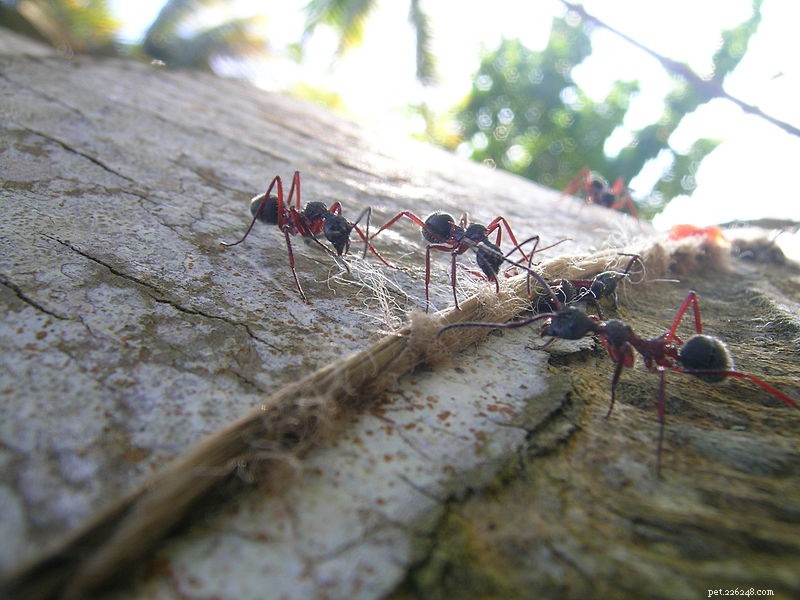 Drawn by uneaten food, shed skins and other organic material, ants sometimes become pests around reptile, amphibian and invertebrate collections. As pesticides are harmful to humans and other creatures alike, eliminating ants in areas used by pets and people takes some care. Today I’d like to highlight a substance that I used with great success in various zoos, and which works equally well at home – diatomaceous earth.
A Most Formidable Insect
Famed entomologist E.O. Wilson has demonstrated that ants “rule” many habitats, driving evolution and other processes to a degree that is hard to imagine. What little work I’ve done with them has convinced me that they are, at the very least, extremely resourceful creatures. When working with Leaf Cutter Ants (Atta cephalotes) at the Bronx Zoo, I observed a dramatic increase in egg production shortly after empty nesting chambers were added to the colony’s enclosure – the workers somehow communicated to the queen that more space was available, and more bodies were needed. This likely holds true for other species as well – killing a few dozen workers will not reduce ant numbers but instead may set up a call for more eggs!
Boric Acid
Toxins that are taken to the nest and shared among the colony can be effective against Pharaoh Ants (Monomorium pharaonis, the most common indoor ant in many locales) and other species. You can create your own ant poison by mixing 2 tablespoons of Boric Acid to 6 tablespoons of sugar, and dissolved the paste in a quart of water; this mixture will also kill crickets and roaches. As with pesticides, however, there is a chance that your insectivorous pets may consume ants that have fed upon boric acid.
Diatomaceous Earth
I much prefer diatomaceous earth, the crushed remains of prehistoric diatoms (algae-like organisms), to pesticides and boric acid. I can’t imagine how people came up with the idea to harvest this unusual resource, but it has long been used for a variety of purposes; amazingly, the famed White Cliffs of Dover are comprised largely of fossilized diatoms (please see photo).
Aquarists know diatomaceous earth as an excellent filtering medium that is used in specially-designed diatom filters. A slightly different product, marketed as pet/food-grade diatomaceous earth is utilized by dog and cat owners to combat internal and external parasites.
Diatomaceous earth is a desiccant, in that it kills insects by drawing moisture from their bodies. I believe it also clogs the spiracles, and so may interfere with respiration. Of course, an ant colony can send workers to replace those that are killed, but this seems not to happen for very long once diatomaceous earth is used. Ants lay down scent trails for others to follow…I imagine that if workers do not return from foraging trips (i.e. if they encounter diatomaceous earth and are killed), then that particular route is abandoned in time. Diatomaceous earth will also kill roaches and crickets, but in my experience molasses traps are more effective…more on this technique in the future.
Note: the product used in filters is different from that marketed for use on dogs and cats; only pet grade diatomaceous earth should be used for ant control.
Favorable Qualities
 I particularly like the fact that diatomaceous earth can be used around kitchen sinks and other areas frequented by people. Also, pet grade diatomaceous earth can be consumed by dogs and cats without ill effects (check label for any precautions re amounts consumed).
When pushed into cracks along walls, it will remain in place for years if kept dry. In fact, I’ve noticed that diatomaceous earth barriers remain intact even when splashed with a bit of water. Diatomaceous earth is not easily dispersed by air movement, and tends to remain stationary even as people walk nearby.
Safety Concerns
Care should be taken that this product is not inhaled or allowed near one’s eyes. People with certain respiratory conditions should not use diatomaceous earth. Please consult your doctor or write in for references to experts if you have any questions.
- Safe Pet-Friendly Diatomaceous Earth: Benefits, Uses, & Tips
- Diatomaceous Earth: A Safe, Effective Solution for Flea Control
- How to Care for Amphibians & Reptiles Through Autumn & Winter
- Salmonella Prevention: Key Guidelines for Reptile & Amphibian Owners
- Safe, Effective Cricket & Roach Control for Reptile & Amphibian Caretakers
- Top Hygrometers for Reptile, Amphibian, and Invertebrate Habitats
- Top Holiday Gifts for Reptile & Amphibian Enthusiasts—From Beginners to Experts