

Horned Frogs as Pets: Expert Guide to Creating the Perfect Terrarium for Pac‑Man Frogs
The beautifully-colored and charmingly-pugnacious Argentine Horned Frog, Ceratophrys ornata, may be the world’s most popular amphibian pet. No matter how many rare and wonderful frogs I encounter, I always save a place for Horned Frogs in the zoo exhibits I manage and in my personal collection. Despite their size (females are often compared to salad bowls), Horned Frogs require relatively little living space. However, several important considerations must be kept in mind when setting up a Horned Frog terrarium. Once this has been accomplished, and if their other needs are met, you can look forward to a pet-keeping experience that may last for several decades. The following information can also be applied to the other Horned Frog species – there are 8 in all – that appear in the pet trade; please post below for more specific information on these.
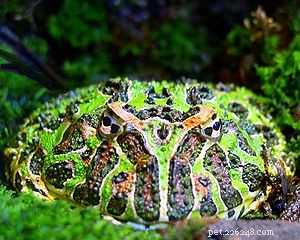
Uploaded to Wikipedia Commons by Avmaier
Natural History
Argentine Horned Frogs inhabit seasonally-flooded grasslands, or savannas, in Argentina, Uruguay and Brazil (please see photo).
Horned Frog tadpoles communicate with one another by sound…the only amphibian larvae known to do so.
Field studies have shown that other frogs comprise up to 80% of the Argentine Horned Frog’s diet, with invertebrates, snakes and small rodents making up the balance.
A Word of Caution
Horned frogs (and African Bullfrogs) sport powerful jaws studded with tooth-like projections known as odontoid structures, and can administer painful bites. However, they are rather clumsy, and may safely be grasped behind the front legs. Always handle amphibians with wet hands, so that you do not remove the protective mucus from their skin.
Although they adapt readily to captivity, no amount of familiarity will dissuade a Horned Frog from lunging at anything moving within range…if you fingers stray in front of your pet’s mouth, you will be bitten!
Housing
Setting up the Terrarium
Horned Frogs are “sit and wait” predators, and rarely move unless necessary. A 10 gallon aquarium will accommodate a single adult, but I prefer to use a tank of 15-20 gallon capacity. Plastic terrariums and modified sweater boxes also serve well as frog homes.
Large frogs produce copious waste products; ammonia poisoning is the most common cause of death among Horned Frogs. Fortunately, they are quite comfortable in simple, easy-to-clean terrariums. Ease of maintenance is a critical consideration in setting up a Horned Frog’s habitat.
An aquarium, tilted to one side to create a water section (place a small block of wood under one end of the tank), is ideal, as it can easily be dumped and cleaned. Alternatively, a shallow water bowl can be utilized. Water used in amphibian terrariums should be treated with an instant chlorine/chloramine remover (sold for use with tropical fishes).
Shelter
In their natural habitat, Horned Frogs burrow into the ground when seeking shelter. Captives will use clumps of plastic or live plants in the same way. Potted or hanging pothos plants are ideal. Plastic plants equipped with suction cups can also be affixed to the glass so that they hang down to the floor…your frogs will seek shelter below.

Uploaded to Wikipedia Commons by Haroldarmitage
Horned Frogs are not stressed by shelters that leave them partially exposed to view…in fact, many individuals give up any pretense of hiding. Most will also utilize cork bark caves, but these stout, clumsy fellows are not good at negotiating less-roomy commercial shelters.
I’ve successfully kept Horned Frogs on soil and dead leaves in large zoo exhibits, but this type of set-up is harder to manage in smaller terrariums (please post below for details).
Substrate
Horned Frogs swallow whatever enters their huge mouths along with meals, and are prone to intestinal blockages from gravel and other substrates. Bare-bottomed terrariums or washable cage liners are best. Sphagnum moss may also be used, but in that case food should be offered in a large bowl, a separate enclosure, or via tongs.
I and other old timers have long used various upholstery and packing foams as substrates for a variety of amphibians. The foam land area is easy to climb onto, remains moist, and can be cleaned with little effort. This option is best used by those who have access to product information, so that toxic materials are not introduced into the terrarium.
Please post below if you would like information on establishing a large, naturalistic Horned Frog terrarium.
Light
Low levels of UVB light may be beneficial (the ZooMed 2.0 is ideal), although millions of Horned Frogs have been bred and raised without. A UVA exposure, while not essential, may encourage natural behaviors and reproduction. A 12:12 hour day/night cycle is ideal.
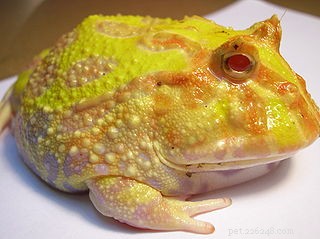
Uploaded to Wikipedia Commons by Grosscha
Humidity
Humidity is not a concern if a water bowl is provided and the terrarium is sprayed regularly (use de-chlorinated water, see above).
Heat
A temperature range of 72-84 F should be maintained. An incandescent bulb or ceramic heater can be used, but be careful of their drying effects. A red or black reptile night bulb will allow for nighttime observations.
Companions
They are best housed singly. Juveniles have insatiable appetites and invariably try to swallow even like-sized tank-mates. Adults may co-exist, but should be fed separately to avoid accidental bites.
Daily Care and Maintenance
Change your frog’s water daily…ammonia is colorless and odorless, but will cause fatalities if not removed quickly. The terrarium itself should be rinsed often and thoroughly cleaned once weekly with a solution of 1 cup bleach per gallon of water.
A Note on Feeding
Although Horned Frog appetites are legendary, they do have specific nutritional requirements that must be met. Calcium deficiencies, obesity and the over-use of rodents in the diet are common concerns. Please see the article linked below and post any questions you may have.
- 224 Classic Human Names for Pets: Old Man & Old Lady Edition
- Protect Your Small Pets This Holiday: Essential Safety Tips
- Choosing the Right Pets for Your Kids: A Guide to Safe and Loving Companions
- Expert Guide to Caring for Argentine Horned Frogs – The Pac‑Man Frog and Its Relatives
- Horned Frogs as Pets: Expert Guide to Creating the Perfect Terrarium for Pac‑Man Frogs
- 10 Best Pet-Friendly Gecko Species
- The 20 Best Pet Frogs for Beginners: Low-Maintenance, Easy Care