

Expert Guide to Caring for Argentine Horned Frogs – The Pac‑Man Frog and Its Relatives
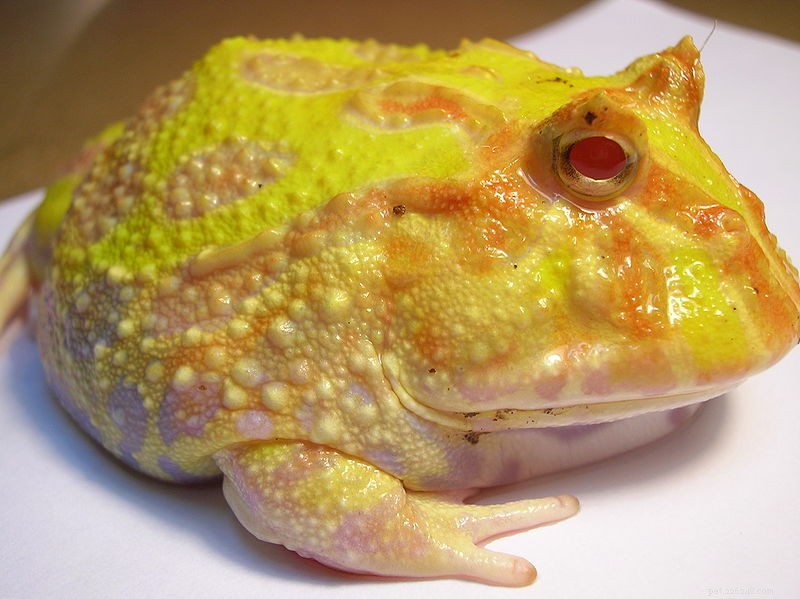
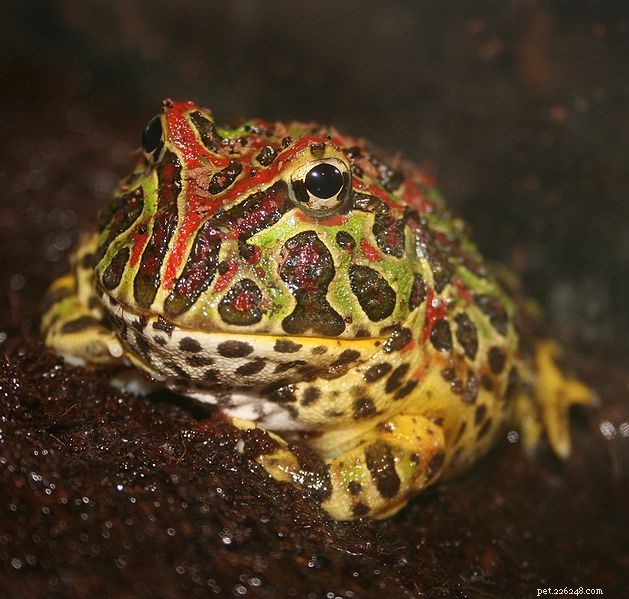 The Argentine or Ornate Horned Frog (Ceratophrys ornata) may be the world’s most popular amphibian pet. Dubbed the “Pac Man Frog” due to a resemblance to the large-mouthed video game character, it is beautifully colored and “charmingly” pugnacious in disposition. Despite their size (females may be compared to salad bowls; males are much smaller), Horned Frogs require relatively little space and are an ideal choice for those seeking an interesting pet that may live to age 20 or more. Albinos and other unique color morphs, as well as hybrids between related species, are available.
Natural History
Argentine Horned Frogs inhabit savannas (grasslands) in Argentina, Uruguay and Brazil. In some regions, they become dormant during cool, dry periods.
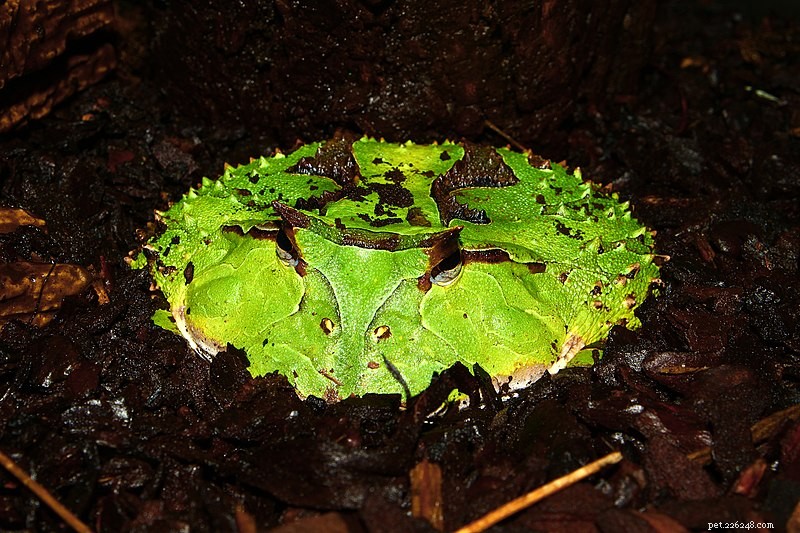
Seven related species have been described. Of these, the Cranwell’s or Chaco Horned Frog (Ceratophrys cranwelli) is most frequently seen in the pet trade. The following information can be applied to its care. The Surinam Horned Frog (C. cornuta) bears the longest “horns” of all (please see photo).
Horned Frog tadpoles communicate with one another by sound…the only vertebrate larvae known to do so. The calls may prevent the carnivorous tadpoles from preying upon relatives…at least until other food runs out! (please see video below).
Hunting Behavior and Diet
Due to their size and aggressive personalities, Horned Frogs, known locally as Escuerzos, are the subject of many tales within their native range. They are, for example, erroneously thought to be venomous and to attack livestock. They are, however, formidable predators. Studies indicate that other frogs comprise up to 80% of the diet, with invertebrates, birds, snakes and rodents making up the balance.
They are assisted in hunting by huge mouths, powerful jaws and bony “teeth”, known as odontoid structures, that project from the lower jaw. Although they bite readily in self defense, these stout beasts are rather clumsy and may safely be grasped behind the front legs (more on handling below).
Housing
Setting up the Terrarium
The ultimate “sit and wait” predator, a Horned Frog rarely moves unless necessary. A 15-20 gallon tank will accommodate an adult.
Horned Frogs produce copious waste products, and ammonia poisoning is the most common cause of pet death. Fortunately, they are quite comfortable in simple, easy-to-clean terrariums. Ease of maintenance is the main consideration when setting up a Horned Frog habitat.
A bare-bottomed aquarium, tilted on one side to create a small water section, is ideal, as it can easily be dumped and cleaned. Alternatively, a water bowl can be utilized.
Horned Frogs do not require plants or other furnishings, and are unusual among frogs in that they are quite content without a hiding spot.
Substrate
 Horned Frogs swallow whatever enters their huge mouths along with meals, and are prone to intestinal blockages from gravel and other substrates. Bare-bottomed terrariums or washable cage liners are best. I’ve used Sphagnum moss with success, but please see cautions under “Feeding”.
Light, Heat and Humidity
Horned Frogs do not require UVB light, and humidity is not a concern if they have access to a water bowl.
A temperature range of 72-85 F suits them well. An incandescent bulb or ceramic heater can be used to warm the terrarium, but be careful of their drying effects.
Companions
Juveniles have insatiable appetites and invariably try to swallow even like-sized tank-mates. They are best housed singly. Same-sized adults may co-exist, but should be fed separately as bites can occur at feeding time.
Feeding
Given the high proportion of vertebrates in their natural diet, it follows that Horned Frogs require a great deal of calcium. Whole fishes and pink mice are ideal calcium sources; crickets alone, even if powdered with supplements, are not sufficient.
Horned Frogs do well on relatively simple fare…fish, earthworms and crickets can make up most of their diet. Minnows, shiners or guppies should be offered, with pink mice should be used less often (once each 7-10 days). While some success has been had by feeding adult mice and even small rats to Horned Frogs, over-use of rodents may lead to liver problems and fur impactions (please see this article).
Crayfishes, roaches, waxworms, butterworms, silkworms and other commercially-available species should also be provided regularly. Where practical, feeders should themselves be provided a nutritious diet before being given to your pets (please see these articles on cricket and earthworm care) To increase dietary variety, try wiggling canned grasshoppers, snails and silkworms in front of your frog (using tongs, not your fingers!).
Food (other than pinkies and fish) should be powdered with Zoo Med ReptiCalcium plus D3 or a similar product. Vitamin/mineral supplements such as Reptivite should be used 2-3 times weekly.
Youngsters do best when fed daily or every-other-day. Adults require only 1-2 feedings per week, or can be provided smaller, more frequent meals.
If you use moss or other substrates, food is best offered via tongs or in a separate, bare-bottomed enclosure to limit substrate ingestion.
Water
Water should be changed daily and treated with a chlorine/chloramine remover. Ammonia, released with waste products, is colorless and odorless at low concentrations. It is rapidly absorbed by frog skin and can prove fatal in short order. Please see this article.
Special Considerations
 Horned Frogs have powerful jaws equipped with sharp, tooth-like structures, and can inflict painful bites. Even after years in captivity, an instinctive feeding response will cause them to bite fingers moved about within range.
Fortunately, it is a simple matter to safely pick up a Horned Frog by grasping it behind the front legs. Amphibians should be handled only when necessary, and then with wet hands, so that you do not remove the protective mucus from their skin. Wash well after handling any animal.
- Breeding the Green & Gold Bell Frog to Support Recovery of Australia's 'Extinct' Gold Spotted Bell Frog – Part 1
- Smokey Jungle Frog (Leptodactylus pentadactylus): Natural History & Expert Captive Care – Part 2
- Smokey Jungle Frog: Natural History, Breeding & Care – Part 1
- Trans-Pecos Rat Snake (Bogertophis subocularis): Natural History & Captive Care Overview – Part 1
- Pickerel Frog (Lithobates palustris): Natural History & Expert Care Guide
- The Green and Black Poison Frog: Natural History & Expert Captive Care
- Corn Snakes: A Comprehensive Guide to Their Natural History and Care in Captivity