

The Bullfrog: North America’s Largest Amphibian and Its Global Invasive Impact
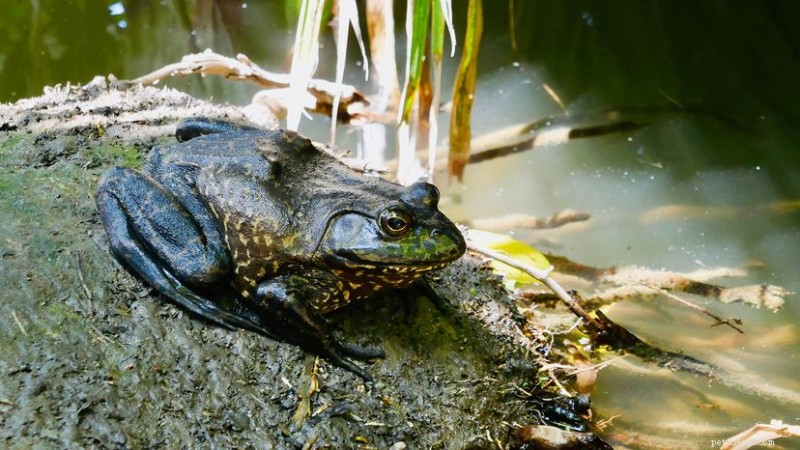
When you hear a deep, resonant “jug‑o‑rum,” you’re likely hearing an American bullfrog in its native wetlands. These frogs are not only loud; they are the largest frog species in North America and, in many parts of the world, a top invasive threat.
What Is a Bullfrog?
Scientific name: Lithobates catesbeianus (formerly Rana catesbeiana). Native to eastern North America, bullfrogs now inhabit the western U.S. and have spread to Europe, Asia, and beyond. They thrive in warm, shallow waters such as ponds, lakes, and slow‑moving rivers.
Adults can reach up to 8 inches (20 cm) in length and weigh more than 1.1 lb (500 g). Their smooth skin, powerful hind legs, and wide mouths enable them to swallow prey larger than themselves.
What Do Bullfrogs Eat?
These amphibians have an almost indiscriminate diet. They consume insects, fish, reptiles, toads, other amphibians, small birds, giant water bugs, and even other bullfrogs. Their broad diet allows them to dominate in diverse habitats, often at the expense of native species such as salamanders and smaller frogs.
Life Cycle of a Bullfrog
Breeding occurs in warmer months. Males establish territories in shallow water and attract females with deep, resonant calls. A single female can lay up to 20,000 eggs in floating masses.
Unlike many amphibians, bullfrog tadpoles may remain in the larval stage for up to two years, depending on temperature and habitat. Once metamorphosed, adults can live up to 10 years in the wild.
Why Are Bullfrogs Considered Invasive?
Although native to parts of North America, bullfrogs have been introduced far beyond their historical range. The Invasive Species Specialist Group ranks them among the most harmful invasive species worldwide. They disrupt ecosystems by preying on native species, competing for resources, and spreading disease.
In regions such as the western U.S., Europe, and Asia, bullfrogs outcompete local amphibians for food and habitat, leading to reduced biodiversity and ecological imbalance. Their adaptability, long lifespan, and broad diet make them especially difficult to control.
Bullfrogs and Humans
American bullfrogs are used in educational settings and are considered a delicacy in some culinary traditions. However, farming and transporting them can unintentionally release individuals into new ecosystems, exacerbating their invasive potential.
This article was produced with AI assistance and rigorously fact‑checked by a HowStuffWorks editor to ensure accuracy and reliability.
- Guide to Saltwater Wrasses: Care, Colors, and Compatibility
- Are Cherries Safe for Rabbits? A Guide to Feeding Your Rabbit Healthy Treats
- Mastering Complex Veterinary Topics with Confidence
- Boost Your Dog’s Confidence: Proven Strategies for Fearful Pups
- How to Safely Transition a Finicky Cat to a New Food Brand
- Can Guinea Pigs Safely Eat Grape Tomatoes? A Complete Feeding Guide
- From Parking Lot to Home: The Inspiring Rescue of Cat Rocko