

Calabar Ground & Mexican Dwarf Pythons: Rare Burrowers Every Python Enthusiast Should Know
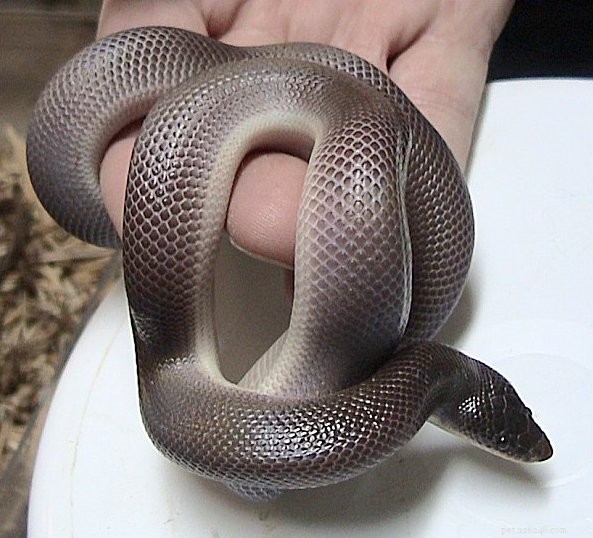 Pythons, whether large or small, tend to be somewhat similar in their captive requirements and behaviors, and many have long been bred and studied. Two species, however, break all python stereotypes and are poorly understood – the Calabar Ground or African Burrowing Python, Calabaria reinhardtii, and the New World or Mexican Dwarf Python, Loxocemus bicolor.
Both species are rather small, and so can be kept in spacious naturalistic terrariums where they might reveal more of their secrets to observant keepers. They live largely below ground, but forage on the surface after dark.
Calabar Ground or African Burrowing Python, Calabaria reinhardtii
Natural History
Often compared to the Sand Boa, taxonomists are unsure of this species’ closest relatives. The head and tail are nearly indistinguishable – when threatened it curls into a ball and waves the tail about to direct attacks there, and away from the head. It is well adapted to life below ground, having smooth body scales, an upturned rostral scale on the snout and tiny eyes. Unlike other pythons, it lacks heat-sensing pits along the jaw.
Calabar Ground Pythons are found in west and central Africa, from Sierra Leone east through Nigeria to Congo and Gabon. They inhabit loose, moist soil and leaf litter in rainforests, marshes and along the edges of farms. Some populations routinely shelter in termite nests.
Captive Care
Calabar Ground Pythons do well in a thick substrate of shredded bark and leaf mulch. The substrate should be misted heavily each day, but should not remain wet. Cork bark should be provided as an above-ground hiding spot.
Temperatures of 78-80 F, with a basking spot of 90 F, are sufficient. Night-viewing bulbs can be used to provide heat without disturbing the snakes at night, and should aid in observing their nocturnal activities
Those I’ve kept fed well upon pink mice and rat pups. Several keepers report that adult mice and other furred prey is often rejected. This makes sense, as wild individuals likely raid rodent nests and may take burrowing lizards and amphibians as well.
Females produce 1-5 very large eggs and, unlike other pythons, do not incubate the clutch.
New World or Mexican Dwarf Python, Loxocemus bicolor
Upon first viewing a huge shipment of New World Pythons at an animal dealer’s facility years ago, I was confused. All had a burrower’s typical cylindrical body, but their colors and patterns varied so much that I thought perhaps several species were present. But such variety is typical, and enhanced by the ever-changing iridescence they exhibit in certain light.
Natural History
For now, Mexican Dwarf Pythons are the sole representative of their family in the New World. Some herpetologists consider them to be more closely related to the Sunbeam Snake, Xenopeltis unicolor, and, confusingly, they are sometimes sold under that name. Currently they are classified in their own subfamily, within the super family Pythonidea.
The common name is somewhat misleading, as these shy burrowers actually are found not only in Mexico but also in Guatemala, Honduras, El Salvador, Nicaragua and Costa Rica.
They share many of the Calabar Ground Python’s adaptations to life below ground, and are also nocturnal.
In the wild, Mexican Dwarf Pythons inhabit loose, sandy soil and leaf litter, and often shelter below fallen trees (please see photo). They apparently spend a good deal of time foraging in rodent burrows, and have even been seen to enter iguana and sea turtle nests to prey upon eggs.
Captive Care
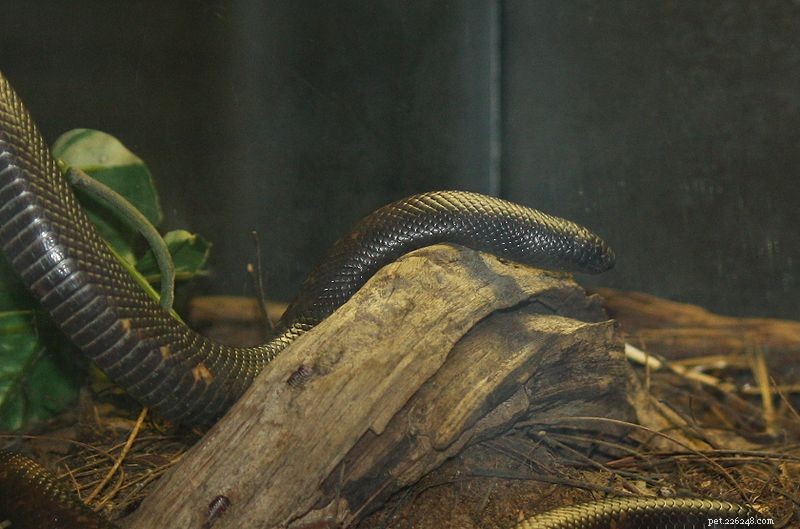 Mexican Dwarf Pythons can be kept as has been described for Calabar Ground Pythons, but need a drier substrate and less misting. A shredded bark – sand mix suits them well. Night-viewing bulbs are indispensible in observing them after dark, when they may forage above-ground.
Given their lifestyle, wild Mexican Dwarf Pythons likely take more nestling rodents, eggs and lizards than adult rodents. Therefore, I prefer pink mice and rat pups as food, but others have reported success using adult rodents.
Males are said to fight viciously, and should not be housed together.
- Boa vs. Python: How to Spot the Differences Between Two Iconic Snakes
- Comprehensive Guide to Python Snakes: Facts, Habitats, and Behavior
- Discover 290+ Rare & Unique Cat Names to Match Your Feline's Personality
- Reticulated Python Care Guide: Housing, Feeding & Health for Experienced Enthusiasts
- Is a Ball Python the Ideal First Pet? Expert Comparison with Popular Reptiles
- Optimal Diet for Captive Newts & Mexican Axolotls: Expert Feeding Guide
- Expert Water Scorpion Care & Behavior Guide for Aquatic Insect Enthusiasts