

Galápagos Tortoise: The Nearly 1,000‑Pound Iconic Giant
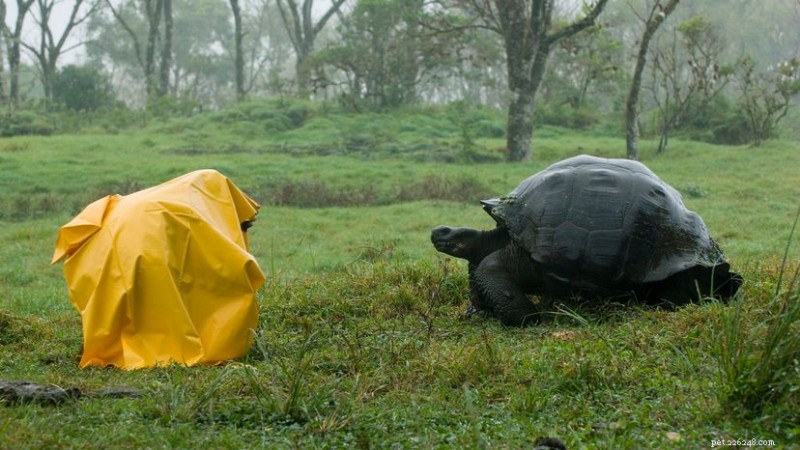
Only when you compare a Galápagos tortoise to a crouching human does the true scale of these reptiles become clear. Kevin Schafer / Getty Images
The Galápagos giant tortoise is one of Earth’s most celebrated reptiles. These gentle giants, the largest tortoises in the world, roam the Galápagos Islands and play a pivotal role in their fragile ecosystems.
They captured Charles Darwin’s fascination during his 1835 voyage, helping shape his theory of natural selection. With lifespans that can exceed a century, they remain living monuments to the islands’ evolutionary history.
Today, they symbolize conservation science. Their survival underscores how delicate island ecosystems are and why human stewardship is essential for protecting critically endangered species.
How the Galápagos Tortoise Got Its Name
Spanish explorer Abraham Ortelius visited the islands in 1570. He was astonished by the giant tortoises and noted that their shells resembled English saddles—“galápagos” in Spanish. He thus christened the archipelago “Insulae of the Galapagos,” a name that has endured.
Physical Characteristics
Adult Galápagos tortoises can reach 900 pounds (408 kg) and over 5 feet (1.5 m) in length. Their massive shells come in two primary shapes: domed and saddle‑backed. Domed shells, common in cooler, wetter islands, provide a rounded profile, while saddle‑backed shells—characterized by a raised front—allow tortoises to reach taller vegetation in arid zones.
Robust, scaly limbs and long necks enable efficient foraging. Juveniles display softer shells that harden with age. Their slow metabolism and sturdy build are perfectly adapted to the Galápagos’ varied habitats.
Subspecies and Distribution
Historically, 15 subspecies were described, but conservation surveys now recognize 12 extant lineages, each finely tuned to its island’s environment. The most famous extinct subspecies, the Pinta Island tortoise, was represented by Lonesome George, the last known individual.
Populations vary by island: Isabela harbors the largest numbers, while Española and Santiago maintain smaller groups. Conservation programs prioritize preserving genetic diversity across these subspecies.
Social Behavior
Galápagos tortoises are largely solitary but will congregate around water sources or abundant feeding sites. During mating season, males engage in shell‑clashing displays to assert dominance. Despite their independence, tortoises indirectly shape their environment by maintaining clear pathways through vegetation—benefiting the entire island ecosystem.
Diet and Foraging
Strict herbivores, these tortoises consume grasses, leaves, cacti, and fruit. Their long necks and high‑domed shells enable access to diverse food sources. In drier habitats, saddle‑backed individuals use their raised necks to reach taller cacti. They can endure up to a year without food or water thanks to fat and water storage and a slow metabolic rate.
Habitat and Protection
They occupy a spectrum of environments—from lush highlands to arid lowlands—reflecting shell morphology. Galápagos National Park protects extensive habitat, while the Tortoise Center on Santa Cruz focuses on habitat restoration and juvenile rearing before release into the wild.
Life Cycle
Females lay 2–16 eggs in shallow nests dug in sandy or volcanic soil. Incubation lasts 4–8 months, with nest temperature determining sex: warmer nests produce females, cooler nests produce males. Hatchlings face predators such as rats, cats, and hawks. Juveniles mature at 20–25 years, contributing to the species’ status as one of the longest‑lived vertebrates.
Predators and Threats
Natural predators historically included large birds and native land crabs. Human arrival introduced feral pigs, dogs, cattle, horses, and rats, all of which damage nests and hunt juveniles. Feral pigs root through nesting sites, while rats raid eggs. Current conservation efforts target invasive species control, nest protection, and predator population management.
Conservation Status
Once abundant, Galápagos tortoises have declined dramatically due to hunting and introduced species. The Charles Darwin Research Station on Santa Cruz runs captive breeding and reintroduction programs to rebuild populations on islands with reduced predation pressure. Ecological restoration projects—eradicating feral predators and restoring native habitats—are vital for rebalancing ecosystems.
Through coordinated efforts of scientists, conservationists, and local communities, the future of the Galápagos giant tortoise is cautiously optimistic, though ongoing vigilance remains essential.
This article was created with AI assistance and subsequently fact‑checked and edited by a HowStuffWorks editor.
- Prevent Furniture Damage: Proven Ways to Stop Cats from Scratching
- Resolving Marking Issues in Your New Beagle
- Charlie, Trigg, and the Unexpected Turtle Encounter
- Make Grooming Fun: A Trusted Guide for Stress-Free Dog Care
- Do Dogs Safely Enjoy Creamy Treats? Expert Tips
- Can Dogs Thrive With One Eye? Expert Insights on Vision, Care, and Happiness
- Understanding Why Dogs Chew and Lick Their Paws: Causes & Solutions