

The Yellow-Bellied Sea Snake: A Master of the Open Ocean
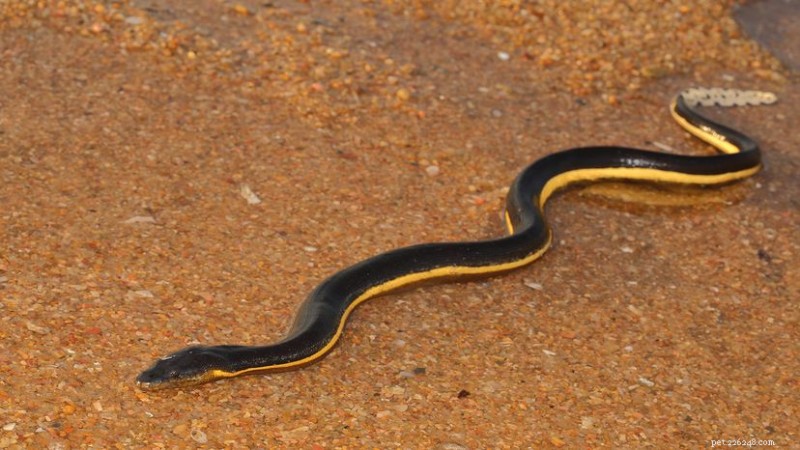
Image: Yellow‑bellied sea snake, © NickEvansKZN / Shutterstock
Discover the remarkable yellow‑bellied sea snake, one of the few reptiles that have fully transitioned to a marine existence. Known scientifically as Hydrophis platurus, this pelagic species spends its entire life drifting across the open ocean.
These snakes are adapted to the warm waters of the Indian and Pacific Oceans, where they thrive far from shorelines. Their unique coloration, physiology, and behavior make them a fascinating subject of study.
Physical Characteristics
The yellow‑bellied sea snake is instantly identifiable by its two‑tone pattern: a dark dorsal side and a bright, yellow ventral side. This color contrast provides camouflage from predators and prey alike— the dark back blends with the deep sea when viewed from above, while the yellow belly merges with surface light from below.
Individuals reach lengths of up to 3 ft (91 cm) and possess a flattened, paddle‑like tail that facilitates efficient swimming. Their bodies are streamlined, and their skin can absorb oxygen, allowing them to stay submerged for extended periods.
Subspecies and Distribution
Unlike many marine snakes, the yellow‑bellied sea snake has no recognized subspecies. It is the sole species that inhabits the open ocean, whereas its relatives prefer coastal or estuarine habitats.
Its range spans the Indian Ocean, the western and central Pacific, and stretches from Southeast Asia to the eastern coast of Africa, reaching as far as Central and South America’s eastern Pacific shores.
Behavior and Social Habits
These reptiles are solitary by nature, spending most of their time alone in the pelagic zone. Aggregations occur only when currents converge, bringing several individuals to the same spot.
While rare, they can occasionally strand on shorelines during storms or unusual tidal events. Yellow‑bellied sea snakes are not aggressive toward humans; bites are exceedingly uncommon.
Diet
As carnivores, they target small fish that swim near the surface. Using potent venom delivered through fixed fangs, they immobilize prey quickly.
Although sea snake venom can be dangerous, effective antivenom is available, and serious human envenomations are rare due to the snake’s remote habitat.
Life Cycle
Reproduction is viviparous— females give birth to live young that are immediately capable of swimming and hunting.
Juveniles drift with ocean currents, feeding on small fish until they mature. Their life history is tightly linked to the dynamics of global marine currents.
Conservation Status
Currently, the species is listed as Least Concern by the IUCN, with stable populations reported across its range.
Nonetheless, threats such as ocean pollution, climate change, and overfishing indirectly affect their habitat. Protecting marine ecosystems remains vital for their continued survival.
This article was produced with AI assistance and subsequently fact‑checked by a HowStuffWorks editor.
- Essential Guide to Heartworm Prevention and Care for Pets
- Understanding Dog Social Hierarchies: How Dogs Organize Their Pack
- Top 500+ Bearded Dragon Names – Smart, Unique & Memorable Picks
- How to Safeguard Your Pet: Proactive Steps to Prevent Loss
- Can Dogs Safely Eat Dragon Fruit? A Guide to Benefits & Risks
- Tracing the Ancient Roots of Today’s Dogs: A 2020 Study Reveals 5 Pre‑Ice Age Breeds
- How to Spot a Hermit Crab Preparing to Molt: Key Indicators