

The Elegant Parrot Snake: A 5‑Foot‑Long, Low‑Venom, Forest‑Dwelling Predator
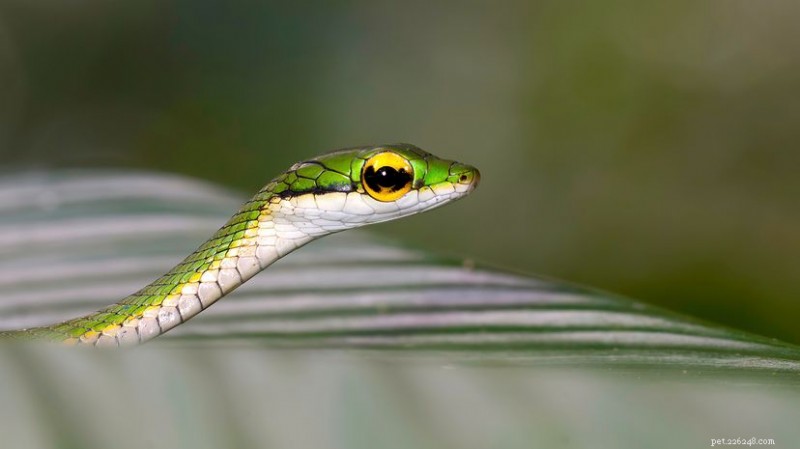
The parrot snake (Leptophis ahaetulla) is a strikingly green arboreal reptile that can reach over five feet in length. Though its slender body gives it an almost delicate appearance, it is a skilled predator that thrives in the dense canopy of Central and South American rainforests.
Physical Characteristics
With a length of up to 68 inches (172 cm), the parrot snake’s body is covered in smooth, glossy dorsal scales that reflect sunlight, enhancing its camouflage among leaves. Its coloration ranges from bright lime to a deeper emerald, often accented by darker dorsal bars or blotches that break up its silhouette. Large, expressive eyes provide excellent vision in low‑light conditions, while enlarged posterior teeth aid in securing prey.
Subspecies Overview
Two main subspecies are recognized: Leptophis ahaetulla and Leptophis liocercus. The former, commonly referred to as the parrot snake, displays a vivid green hue and is widespread across Central and South America. L. liocercus tends to exhibit more muted olive or brownish tones and is typically confined to specific locales within the same geographic range. Both subspecies share similar ecological roles but may differ subtly in size and coloration.
Behavior and Social Habits
Parrot snakes are predominantly solitary and diurnal. They spend most of their day navigating low branches and understory vegetation, hunting opportunistically. While they are not aggressive toward humans, they will defend themselves by rearing and striking if threatened. Their mild venom, though not dangerous to humans, is effective against small vertebrate prey.
Diet
As carnivores, parrot snakes feed mainly on lizards, frogs, and occasionally other snakes. Their acute eyesight and quick reflexes enable them to ambush prey with precision. Their slender, elongated bodies allow them to reach for prey hidden in foliage or leaf litter, making them adept at exploiting a variety of microhabitats.
Habitat
These snakes favor humid, low‑vegetation zones near bodies of water such as rivers, ponds, and swamps. Their ability to blend seamlessly into green foliage makes them elusive even to seasoned researchers. They occupy primary tropical rainforests, secondary woodlands, and occasionally peri‑urban forest edges. Deforestation and habitat fragmentation pose significant threats by reducing both cover and prey availability.
Life Cycle
Reproduction occurs via egg‑laying, with clutches ranging from five to ten eggs. After deposition, the female abandons the clutch, allowing the eggs to incubate in concealed sites like leaf litter or beneath decaying logs. Hatchlings are fully independent from birth, exhibiting the same vibrant green coloration that provides immediate camouflage. Rapid growth during the first year is followed by periodic molting as the snake matures.
Conservation Status
Currently classified as Least Concern by the IUCN, the parrot snake’s populations remain stable. However, ongoing deforestation and human encroachment threaten their habitat. Conservation efforts focused on preserving forest cover and mitigating habitat loss will be crucial to maintaining healthy populations and the broader ecological communities they support.
Our article was drafted with AI assistance and subsequently reviewed and fact‑checked by a HowStuffWorks editor to ensure accuracy and reliability.
- Conure Costs 2022: Prices, Care, and Lifespan Guide
- Dingo: Australia's Iconic Wild Dog – Facts, Habits & Conservation
- 343 Perfect German Shepherd Names: Unique Picks for Boys & Girls
- Cheagle: The Complete Guide to the Beagle‑Chihuahua Mix
- What Triggers Rabbit Zoomies? Understanding Their Energetic Bursts
- 20 Hilarious Unicorn Memes That Will Brighten Your Day
- Master Litter Training Your Cat in 5 Simple Steps – The Ultimate Guide