

9 Brown Snake Species That May Be Hiding in Leaf Litter Near You
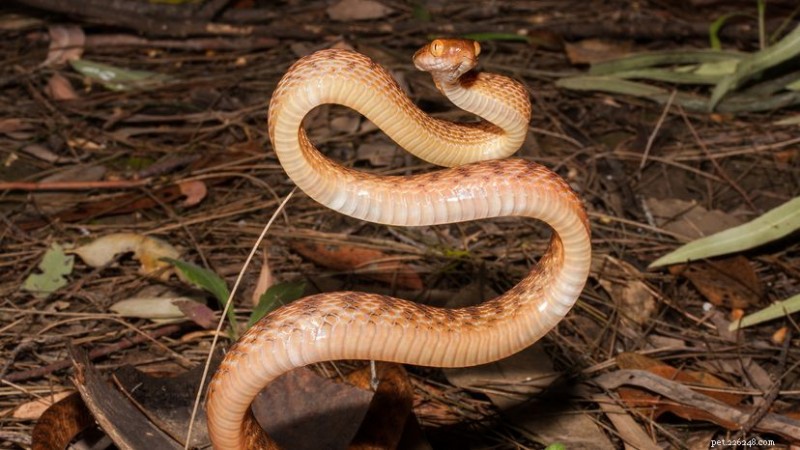
Brown snakes are among the most diverse and ecologically important reptiles worldwide. Their sizes and venom potency vary widely, yet each species plays a vital role in its habitat.
Despite their unassuming appearance, brown snakes are highly adaptable, occupying forests, grasslands, deserts, and even urban settings. Below we profile nine species that may be lurking in leaf litter near you.
1. Eastern Brown Snake (Pseudonaja textilis)

The eastern brown snake, often called the common brown snake, is among the world’s most venomous snakes. It is found throughout eastern Australia and parts of Papua New Guinea. Its venom targets the nervous system and disrupts blood coagulation, making it potentially lethal. However, this species also helps control rodent populations, reducing agricultural damage.
2. Western Brown Snake (Pseudonaja nuchalis)
Also known as the gwardar, the western brown snake inhabits Australia’s arid and semiarid regions. Its coloration ranges from light to dark brown, sometimes orange or reddish. Though less aggressive than its eastern cousin, it delivers a potent bite that can be life‑threatening. Its rapid strike and retreat behavior make encounters unpredictable.
3. Northern Brown Snake (Storeria dekayi)
This small, nonvenomous species is native to North and Central America. It frequents gardens, forests, and urban gardens. With a light to dark brown body and a lighter belly, it feeds on earthworms, slugs, and other invertebrates, helping control soil pests.
4. Western Brown Snake (United States) (Storeria dekayi wrightorum)
The southwestern subspecies thrives near streams and gardens. It preys on small snails, extracting them from shells, and prefers moist microhabitats.
5. Texas Brown Snake (Storeria dekayi texana)
Found primarily in Texas, this small, nonvenomous snake is dark brown with a lighter dorsal stripe and dark eye spots. It shelters under logs and rocks, hunting insects and slugs, thereby reducing pest populations.
6. King Brown Snake (Pseudechis australis)
Despite its name, the king brown snake is a member of the black snake family. It is one of Australia’s largest venomous snakes, with a wide color range from brown to copper. Its venom is less potent than the eastern brown snake’s, but its large venom yield and powerful build make it dangerous. It occupies deserts, coastal areas, and more.
7. Strap‑Snouted Brown Snake (Pseudonaja aspidorhyncha)
Distinguished by a chisel‑shaped snout, this species lives in south‑central Australia. Its venom is potent, and it plays a crucial role in controlling local prey populations.
8. Eastern Smooth Earth Snake (Virginia valeriae)
Often mistaken for a brown snake, the eastern smooth earth snake is nonvenomous. It inhabits the eastern United States, preferring leaf litter and sandy soils for burrowing. Its diet of earthworms benefits garden health.
9. Brown Tree Snake (Boiga irregularis)
Native to Australia and Papua New Guinea, the brown tree snake is mildly venomous and an adept climber. It is an invasive species in Guam, where it has decimated bird populations. In its native range, it serves as an important predator of small mammals and birds.
- Can Tarantulas Really Jump? Understanding Which Species Can Leap
- When Dogs Pant Without Activity: Causes, Signals, and When to Seek Help
- Your Cat Is Injured? Expert Guide to Rapid Healing & Care
- Can Dogs Detect Aliens? The Truth About Pets and UFOs
- How to Handle Your Dog's Ingested Objects: Immediate Steps & Prevention
- Understanding and Managing Coccidia in Cats
- Top Covered Cat Litter Boxes of 2022: Comfort, Odor Control & Privacy