

Training Your Dog to Run with You: A Comprehensive Guide for Healthier, Happier Pairs

There's something truly special about hitting the pavement or trail with your dog trotting happily beside you. Whether you’re an experienced runner or a dog parent looking to channel your pup’s boundless energy, this guide provides expert, evidence‑based steps to build a successful running partnership. Every dog‑human team is unique, so the following strategies can be tailored to your individual pace, preferences, and challenges.
In this article we’ll cover:
- Is your dog ready to run?
- What you need to run safely with your dog?
- How to train your dog to run alongside you
Is Your Dog Ready to Run?
Before you lace up, assess your dog’s physical readiness and overall health. Puppies and young dogs have developing bones and joints—many veterinarians recommend waiting until 12‑18 months for small breeds and up to 2 years for larger breeds before starting regular runs (Barcelos et al., 2020). Observing your dog’s energy level, stride, and breathing can also signal readiness: a dog that paces, grabs toys, or exhibits the “zoomies” may thrive with more activity.
Schedule a vet visit to discuss your dog’s specific needs. Your veterinarian can provide tailored advice, especially if your dog has joint concerns, breathing issues, or a history of exercise intolerance. Incorporate their guidance into a gradual training plan that respects your dog’s anatomy and temperament.
Remember, every breed is different. Labs, Border Collies, Vizslas, and Weimaraners often love running, but mixed‑breed companions can also find joy in trails or gentle walks. The goal is to find an activity that benefits both you and your dog’s well‑being.
What You Need to Run with Your Dog?
The right gear and planning set the stage for a safe, enjoyable run. Consider the following essentials:
Proper Leash and Harness
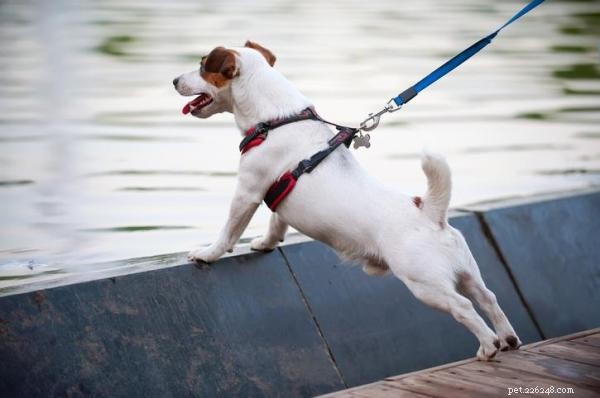
Choose a sturdy, non‑elastic leash 3‑6 feet long—retractable leashes reduce control and can cause injuries. A well‑fitting harness, rather than a collar, distributes pressure across the chest, minimizing strain and improving directional control.
Hands‑Free Running Leash Options
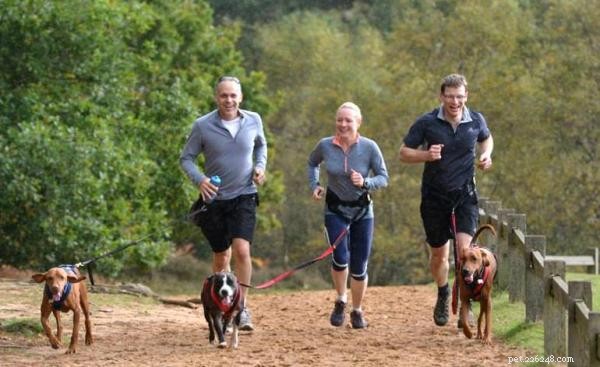
Waist‑worn leashes free your arms and often feature shock‑absorbing bungees and quick‑release mechanisms. Select a style that matches your running environment and your dog’s running style.
Collapsible Water Bowls
Hydration matters for both of you. Lightweight, collapsible bowls fit easily in a running pack or pocket. Plan water breaks every 15‑20 minutes in warm weather or on long runs. Dog‑specific water bottles with built‑in trays are convenient for on‑the‑go hydration.
Paw Protection
Assess the surface and weather conditions. Hot pavement, rough trails, or icy roads may warrant booties or paw wax. Observe your dog’s comfort on different terrains and adjust accordingly.
Struggling with a dog that pulls or drags you? Check out our guide on transforming leash pulling into a smooth side‑by‑side jog.
How to Train Your Dog to Run Alongside You
Training a dog to run is a rewarding process that strengthens your bond while promoting healthy habits. With patience and consistency, you can develop a routine that suits both of you.
1. Master Basic Leash Walking
Before adding speed, ensure your dog walks calmly on a leash without pulling. Practice in low‑distraction areas. If your dog pulls, gently change direction or pause—this teaches that pulling won’t advance them. Front‑clip harnesses can also discourage pulling by redirecting the dog toward you.
2. Build Pace Gradually
Introduce short 30‑second jogging intervals during regular walks, then return to walking when your dog shows signs of fatigue or distraction. Extend running segments gradually as confidence and endurance grow. Some dogs adapt within weeks; others may need months—adjust the pace to your dog’s progress.
3. Teach Running‑Specific Commands
Clear communication enhances safety and enjoyment. Use consistent commands such as:
- “Heel” – return to your side when the dog drifts ahead.
- “Slow” – reduce pace near obstacles or turns.
- “Stop” or “Wait” – immediate halt at crossings or hazards.
- “Leave it” – ignore distractions like squirrels or food.
4. Use Positive Reinforcement
Reward desired behavior immediately. Whether it’s a treat, enthusiastic praise, or a quick toy play, the reward should be something your dog values. Start by pausing briefly to give the reward, then gradually shift to verbal praise while in motion.
5. Keep Early Runs Short and Fun
Initial dedicated runs should last 10‑15 minutes—just enough to create excitement without causing dread. End each session while both of you are still enjoying the activity, and vary routes to keep the experience fresh.
Want to deepen your training? Explore our comprehensive guide on positive reinforcement techniques that strengthen your bond on and off the trail.
For more advanced training resources, visit our Advanced Education category.
Bibliography
- Barcelos, A. M., Kargas, N., Maltby, J., Hall, S., & Mills, D. S. (2020). A framework for understanding how activities associated with dog ownership relate to human well‑being. Scientific Reports, 10, 11363. https://doi.org/10.1038/s41598-020-68446-9
- Barcelos, A. M., Kargas, N., Assheton, P., & Mills, D. S. (2023). Dog owner mental health is associated with dog behavioural problems, dog care and dog‑facilitated social interaction: a prospective cohort study. Scientific Reports, 13, 21734. https://doi.org/10.1038/s41598-023-48731-z
- Powell, L., Edwards, K. M., McGreevy, P., Bauman, A., Podberscek, A., Neilly, B., Sherrington, C., & Stamatakis, E. (2019). Companion dog acquisition and mental well‑being: a community‑based three‑arm controlled study. BMC Public Health, 19, 1428. https://doi.org/10.1186/s12889-019-7770-5
- Sundman, A. S., Van Poucke, E., Svensson Holm, A. C., Faresjö, Å., Theodorsson, E., Jensen, P., & Roth, L. S. (2019). Long‑term stress levels are synchronized in dogs and their owners. Scientific Reports, 9(1), 1–7. https://doi.org/10.1038/s41598-019-43851-x
- Westgarth, C., Christley, R. M., Jewell, C., German, A. J., Boddy, L. M., & Christian, H. E. (2019). Dog owners are more likely to meet physical activity guidelines than people without a dog: An investigation of the association between dog ownership and physical activity levels in a UK community. Scientific Reports, 9, 5704. https://doi.org/10.1038/s41598-019-41254-6
- Understanding Temaril‑P Side Effects in Dogs: A Comprehensive Guide
- What’s in Your Dog’s Poop? How to Spot Health Issues & When to Call the Vet in Bend
- Shiba Inu: Classic Japanese Companion – Bold, Affectionate & Loyal
- Why Cats Groom Frequently: Understanding Their Self‑Bathing Behavior
- The Fascinating Science Behind Your Cat’s Nose
- Are Tomatoes Safe for Rabbits? A Comprehensive Guide
- Expert Guide: Fast & Effective Puppy House Training Steps