

Egg Retention (Dystocia) in Turtles: Causes & Practical Solutions – Part 1
One of the most common and serious problems faced by turtle keepers involves female turtles (mated or unmated) that develop eggs but refuse to deposit them in the terrariums or aquariums in which they live. While this can be the result of any number of health problems (i.e. low calcium levels, tumors), the lack of an appropriate nesting site is more often than not the cause.
Retained Eggs
It’s very difficult to keep turtles, especially semi-aquatic and aquatic species, in an enclosure that allows for year-round access to a nesting site. Providing a terrestrial nesting site, as well as adequate swimming space, usually involves the use of a pool or pond as opposed to an aquarium.
Gravid females without access to a nesting site usually become very restless and may deposit their eggs in the water. This is not, however, a safe strategy, as such females wait for a long time before expelling their eggs, and may not deposit the entire clutch. Retained eggs may become over-calcified and difficult to pass, or they may break within the female’s body and cause an infection (egg yolk peritonitis) that is invariably fatal if not treated early-on.
Nesting Preferences
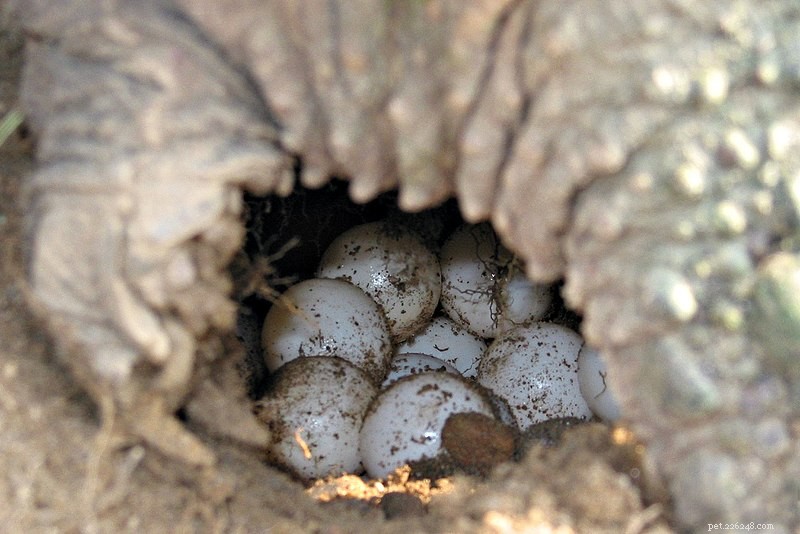 In order to provide your turtles with acceptable nesting sites, it is essential that you are familiar with both the species’ natural history and the individual turtle. In this way, you will be able to provide the site at the correct time of year and manipulate other factors (i.e. temperature) appropriately.
The substrate and location of the site provided is also important – a soil/sand mix is acceptable to many turtles, but some (Batagur baska, most softshells) prefer sand while others (Black-Breasted Leaf Turtles, Geoemyda spengleri) often choose to lay alongside a log or other structure. During my Bronx Zoo years, I spoke with several colleagues (at different zoos) who observed gravid Giant Musk Turtles (Staurotypus triporcatus) to consistently choose elevated nesting sites.
- Mastering Newt Care: Natural History & Captive Management – Part 1
- Breeding Green Iguanas: Choosing the Ideal Indoor & Outdoor Nest Sites – Part 1
- Breeding the Green Basilisk (Plumed) and Related Species – A Comprehensive Guide
- Addressing Egg Retention (Dystocia) in Turtles: Practical Solutions & Best Practices – Part 2
- Softshell Turtles: Comprehensive Natural History & Proven Care Tips – Part 1
- Softshell Turtles: Expert Care & Natural History Guide – Part 2
- Asian Turtle Crisis: Urgent Update on Freshwater Turtle Extinction – Part 2