

Dwarf Chameleons: Expert Care Tips & Natural History Insights
This article is one of a series in which I will provide a brief introduction to both popular and rarely-kept amphibians, reptiles and invertebrates. I’ll cover such topics as unique habits in the wild, common mistakes or concerns in captive care, pet pros and cons, little-known husbandry tips and so forth. Detailed care articles will follow…until then, I would enjoy receiving your questions and comments. Today we’ll take a look at the Dwarf Chameleons (Brachypodion spp.).
Small and Hardy
South Africa’s Dwarf Chameleons seem, at first glance, to be an excellent choice for the aspiring chameleon keeper. Indeed, their small size (most top out at 7 inches or so) is an important factor – many of the larger chameleons need a room-sized enclosure if they are to thrive. All are now protected by the government of South Africa, but the Natal Midlands Dwarf Chameleon (Bradypodium thamnobates) and the Cape Dwarf Chameleon (B. pumilum) are regularly bred by hobbyists.
Also, Dwarf Chameleons hail from extremely harsh environments, and so are far hardier than most of their relatives (or, for that matter, most lizards). In the Southeastern USA, they can be often be kept outdoors year-round, and the best breeding results have been obtained under these conditions. Several species hibernate in the wild and are unaffected by short-term exposure to freezing temperatures; on the other hand, most are stressed above 85 F or so.
A Caution Regarding Feeding
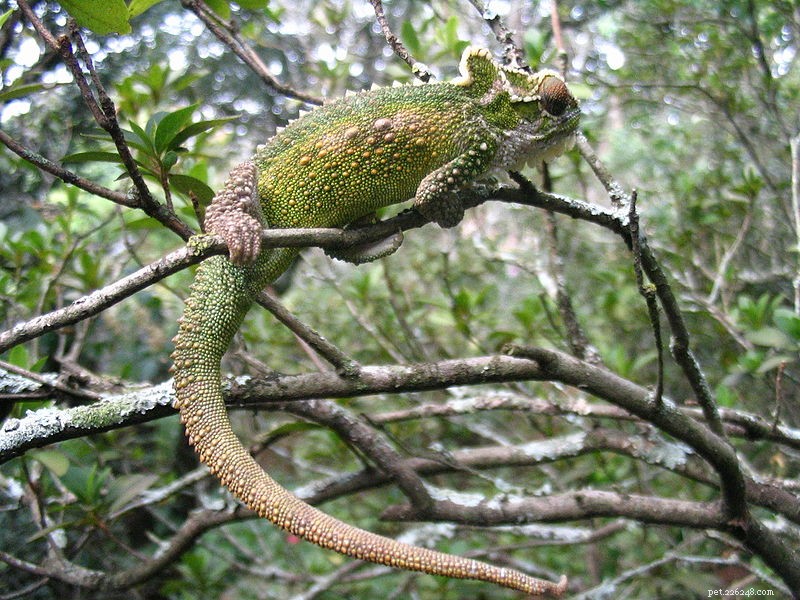 Adult Dwarf Chameleons are just the right size to take crickets and mealworms, but they will not thrive for long on such a diet. Dietary variety is critical to their health and well-being, as they are adapted to prey on a wide variety of invertebrates.
The ZooMed Bug Napper Insect Trap is an invaluable aid in collecting flying insects such as moths, beetles and flies – the Chameleons reactions to these will leave no doubt as to their value in improving your pets’ quality of life.
Caterpillars, Snowy Tree crickets, Orange-spotted Roaches, Field Crickets Termites, Grasshoppers, Katydids, Sow Bugs and a wide variety of other invertebrates will also be consumed with great enthusiasm. Houseflies are, in my opinion, vital when rearing young Dwarf Chameleons.
Be sure to feed a nutritious diet to any Domestic Crickets that are utilized. During periods when crickets comprise the bulk of the diet, powder most meals with supplements, alternating among Reptivite with D3, ReptiCalcium and ReptoCal. I do not use supplements when relying upon wild-caught invertebrates.
- Mastering Newt Care: Natural History & Captive Management – Part 1
- Red-Eyed Treefrog (Agalychnis callidryas): Captive Care Guide & Natural History
- Mudpuppy: Natural History & Care Guide – Part 1
- Painted Turtle Care & Natural History: Expert Tips for Owners
- Fire Skink (Mochlus fernandi): Natural History & Expert Care Guide
- Rhinoceros Iguana: Natural History, Care Guide, and Habitat Insights
- Mossy Treefrog (Theloderma corticale): Expert Guide to Care and Natural History