

Greater Siren (Siren lacertina): Natural History, Care, and Fascinating Behaviors
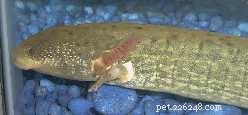 Salamanders are by no means defenseless – indeed, the skin toxins produced by the California Newt and its relatives are among the most virulent natural chemicals known. But most herpers tend to regard them as small, slow-moving, inoffensive beasts. Not so the mighty Greater Siren, Siren lacertina. This caudate “rule-breaker” can bite viciously in self defense, and is a major predator in its environment…but it is also among the most interesting amphibians that one can keep, and very hardy to boot.
Description
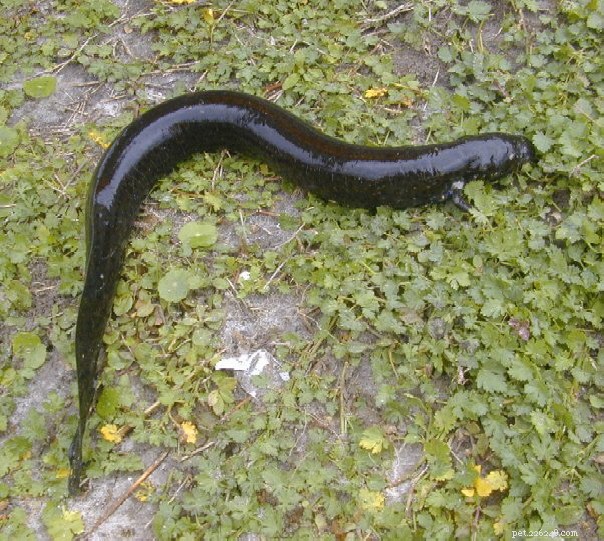
The long, eel-like body is grey or olive to near-black in color. Measuring up to 38.5 inches in length, Greater Sirens are among the world’s longest salamanders. They are exceeded in length only by the Two-toed Amphiuma (also native to the USA) and the Japanese and Chinese Giant Salamanders.
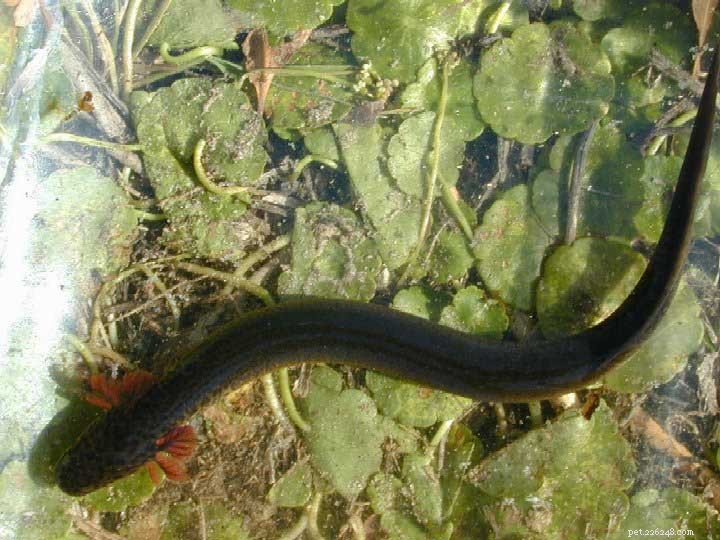
Greater Sirens lack rear legs and are equipped only with tiny forelegs. However, the tail, laterally compressed and equipped with a fin, renders them as powerful, agile swimmers.
Along with Axolotls, Hellbenders and certain others, Greater Sirens do not transform into a land dwelling adult form and retain larval characteristics such as external gills (they have lungs as well) and an aquatic lifestyle.
Salamanders exhibiting these characteristics are termed neotenic.
Range
Greater Sirens are found along the US coastal plain, from Washington, D.C. south to southern Alabama and throughout Florida. There are isolated populations in southern Texas and Tamaulipas, Mexico.
Habitat
Muddy, weed-choked swamps, ponds, ditches and the vegetated shores of large lakes and streams. Greater Sirens are nocturnal and completely aquatic but can cross land if necessary.
Status
 Siren status is difficult to monitor due to their aquatic habitat and secretive ways. They are considered, in general, to be common, but are rare and protected in Maryland. Surveys are needed, especially where wetlands have been drained.
Reproduction
Up to 500 eggs are deposited (February-March), singly or in small clusters, on the pond bottom in densely vegetated sites. There is some evidence that females may guard eggs, but we do not as yet know whether fertilization is internal or external (great project for an aspiring keeper!)
The eggs hatch in April and May; very little is known of larval period.
Diet
Voracious hunters, Greater Sirens take a wide variety of prey, including fish, frogs, other salamanders, tadpoles, insects, crayfishes, shrimps, snails and carrion. Some suggest that ducklings and small rodents are not beyond their grasp, and that algae may be consumed by juveniles.
Miscellaneous
Greater Sirens aestivate (become dormant) during droughts. At these times, they dig into the mud and surround themselves with a cocoon made of dead skin cells. The gills atrophy during this period.
In laboratory situations, these hardy beasts have survived for over 5 years in dormancy, losing more than 85% of their body weight in the process! Typical dormancy in the wild lasts for 1-3 months.
Greater Sirens are major predators within their habitat, and are in turn consumed by water snakes, turtles, alligators, otters and wading birds.
Unlike most salamanders, they are quite vocal – producing loud “yelps” and other sounds when disturbed.
Due to the variety of unique characteristics they possess, Greater Sirens, along with Lesser and Dwarf Sirens, are considered by some taxonomists to belong to a different order than do the true salamanders.
Captive Care
 General
The Siren’s innate hardiness (captives have topped 25 years of age) should not be taken as an excuse to ignore water quality. Effective filtration and frequent water changes are critical to their health. Please see my article on Mudpuppy Care below for further details on keeping large aquatic salamanders.
Move Sirens by coaxing into net; they can administer a painful bite! Siren skin damages easily in nylon nets, so handle only when necessary.
Habitat
The aquarium’s lid should be well-secured, as they will attempt to escape at night (line the lid with foam or enclose in a pillow case so that new arrivals do not damage their snouts by rubbing on screening). Keep plenty of cover such as plastic plants in aquarium, and provide a cave or PVC pipe where the Siren can get completely out of sight.
Dim lighting by day followed by brighter lights at night may encourage daytime activity, but do this only if animal is feeding and otherwise adjusted to captivity. Night-viewing bulbs may help to observe Sirens after dark.
Greater Sirens fare best at water temperatures of 70-76 F, but tolerate wider range.
I have kept Sirens on gravel, but a softer substrate, such as sand, is preferable. Avoid any substrate that will raise pH.
Diet
Minnows, shiners and other freshwater fish and earthworms should form the bulk of the diet. Small crayfishes are a great favorite (I remove the claws for safety’s sake); crickets and other insects are also readily accepted. An occasional pink mouse is fine, but do not rely heavily upon rodents.
Some individuals will take Reptomin and freeze-dried shrimp.
- Mastering Newt Care: Natural History & Captive Management – Part 1
- Japanese & Chinese Fire‑Bellied Newts: Natural History & Care Guide
- Mudpuppy: Natural History & Care Guide – Part 1
- Painted Turtle Care & Natural History: Expert Tips for Owners
- Dwarf Chameleons: Expert Care Tips & Natural History Insights
- Fire Skink (Mochlus fernandi): Natural History & Expert Care Guide
- Rhinoceros Iguana: Natural History, Care Guide, and Habitat Insights