

Amazon Milk Frog: The Story Behind Its Milky Defense
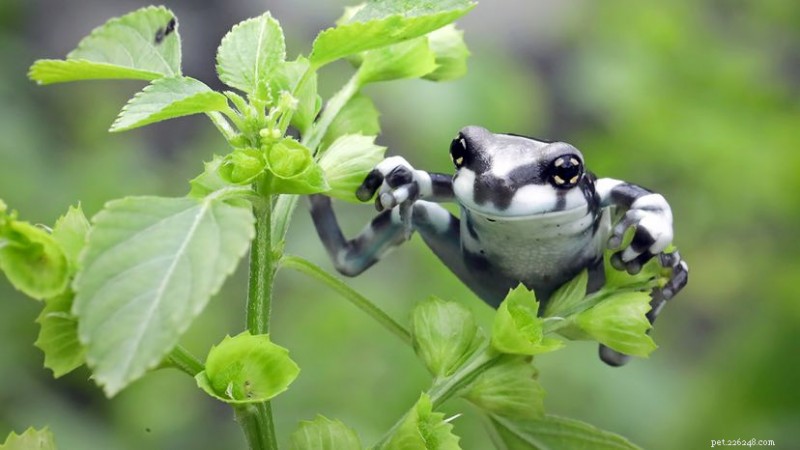
With its vibrant colors and intriguing name, the Amazon milk frog (Trachycephalus resinifictrix) stands out among rainforest amphibians. Native to the humid canopy of Brazil, Peru, Ecuador, and French Guiana, these tree‑dwelling frogs thrive in water‑filled tree holes high above the forest floor.
What Does an Amazon Milk Frog Look Like?
Adult milk frogs measure up to 10 cm (4 in) in length—roughly the size of an apple. Their skin is a light gray with brown or black banding that becomes slightly bumpy with age. One of their most striking features is a golden iris with a black pupil. Large toe pads enable them to cling to bark and leaves, making them adept climbers. During the breeding season, males develop prominent vocal sacs.
How Do Milk Frogs Live in the Wild?
These arboreal amphibians spend most of their lives in trees. Males call from tree holes until a female arrives. She deposits her eggs in the water‑filled cavity, and the male externally fertilizes them. Tadpoles grow in this miniature pond, feeding on algae, detritus, and unfertilized eggs. The species is most active during the rainy season, when humidity and temperature rise.
Amazon milk frogs are widely distributed and maintain large populations, which has helped them remain common despite ongoing habitat loss in the Amazon.
Are Amazon Milk Frogs Poisonous?
They do produce a milky secretion that can irritate human skin, but their toxins are mild compared to poison dart frogs. The secretions serve as a deterrent against birds, lizards, and other small predators.
Can You Keep a Milk Frog as a Pet?
Because of their striking appearance and ease of care, Amazon milk frogs are popular in the exotic pet trade. In captivity they require high humidity, warm temperatures, and a diet of feeder insects such as crickets. A well‑equipped enclosure should mimic their rainforest habitat with ample vertical space, live plants, and a water feature. In most cases, the frogs rarely secrete their milky toxin in captivity.
This article was created with AI assistance and then fact‑checked and edited by a HowStuffWorks editor.
- Keep Your Cat Off Kitchen Counters: Proven Tips & Alternatives
- Top 10 Premium Dry Cat Foods in the UK – 2022 Expert Review
- How Cats and Dogs Show Affection: A Heartwarming Look
- Expert Guide: Proper Care for Your Dog's Paws
- Top 20 Medium‑Sized Dog Breeds: A Trusted Guide
- African Sideneck Turtle (Pelomedusa subrufa): Comprehensive Species Guide
- Basset Fauve de Bretagne: Energetic, Loyal Family Companion