

Trans-Pecos Rat Snake (Bogertophis subocularis): Natural History & Captive Care Overview – Part 1
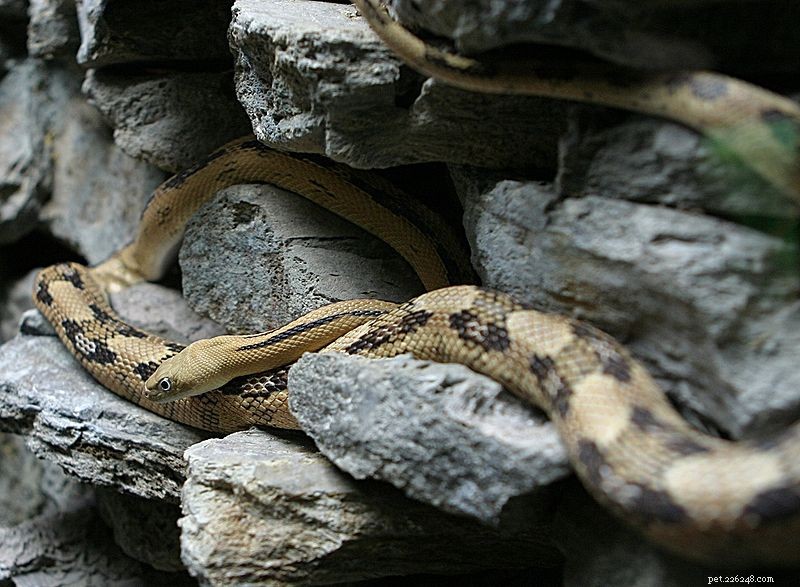 North America is home to a great diversity of ratsnakes, many of which have long been bred in captivity. One of the more unique species to have become established in the trade is the Trans-Pecos Ratsnake, Bogertophis (formerly Elaphe) subocularis. Despite wide availability, its life in the wild remains largely unstudied. Today we’ll examine what is known of its natural history, and move on to care and breeding in Part 2.
Description
The Trans-Pecos Ratsnake ranges in color from almost pure yellow to yellowish-olive or tan, and is one of the few snakes clad mainly in this color. It is further distinguished by dark-brown to black “H” shaped blotches between 2 long dorsal stripes and by unusually large, bulging eyes (a likely adaptation to its nocturnal lifestyle). Light or “blond” and dark phases occur naturally, and at least 18 color varieties have been produced in captivity. Adult Trans-Pecos Ratsnakes measure 3 to 5½ feet in length.
The Latin species’ name, subocularis, arises from the unique row of small scales located below the eyes. This species is less-closely related to the Black Ratsnake complex (please see photo) than was formerly believed.
The Mexican race has larger blotches and had been designated as a distinct subspecies, Bogertophis subocularis amplinotus.
Range
The Chihuahuan Desert and the Big Bend/Trans-Pecos regions of southwestern Texas (please see photo) seem to form the core of this species distribution, but it is hard to study due to its secretive ways. It also occurs in southern New Mexico and ranges south to north-central Mexico (southern Coahuila), where it may be found at altitudes ranging from 1500-5000 feet above sea level.
Habitats
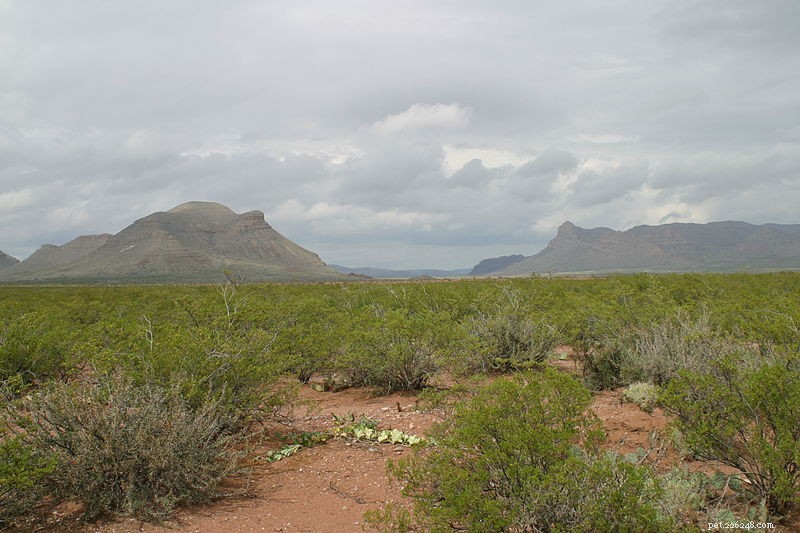 The Trans-Pecos Ratsnake inhabits deserts and desert fringes, usually in association with rock-strewn slopes and such arid-adapted plants as agave, creosote, cactus and yucca.
It spends most of its time below-ground in deep rock crevices or armadillo and rodent burrows, and is largely nocturnal.
Status
Protected by the state of Texas due to its limited range, but field research is needed. Some herpetologists believe that it may be more widespread than is generally believed.
Reproduction
Mating occurs in the spring and 2-9 eggs are laid in the summer. The young, 12-15 inches in length, hatch after an incubation period of 2-3 ½ months. Hatchlings feed mainly upon small lizards.
Diet
Lizards are said to be favored, especially by juveniles, but kangaroo rats, cactus mice, pocket gophers, bats (see video below) and other mammals are taken. Prey is overcome by constriction.
- Mastering Newt Care: Natural History & Captive Management – Part 1
- Mudpuppy: Natural History & Care Guide – Part 1
- Expert Guide to Mudpuppy (Waterdog) Care – Part 2: Habitat and Light Management
- Softshell Turtles: Comprehensive Natural History & Proven Care Tips – Part 1
- Softshell Turtles: Expert Care & Natural History Guide – Part 2
- Trans-Pecos Ratsnake Care Guide: Natural History & Housing Tips – Part 2
- Corn Snakes: A Comprehensive Guide to Their Natural History and Care in Captivity